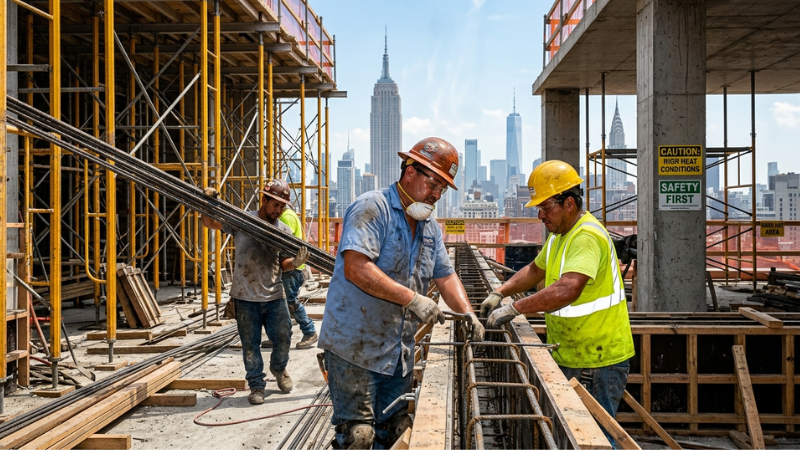
Every summer, construction crews across New York face rising temperatures while working on roads, rooftops, scaffolding, and active job sites. As temperatures climb, conversations around Heat Illness Prevention become increasingly important across the construction industry.
According to the CDC, outdoor workers are among the groups most exposed to heat-related health risks during extreme temperatures. Construction workers often perform physically demanding labor for long hours under direct sunlight, making heat exposure a serious workplace concern.
Why Heat Illness Prevention Matters on Construction Sites
Construction work regularly involves heavy lifting, repetitive motion, protective equipment, and exposure to hot surfaces or enclosed work areas. Federal workplace safety agencies have repeatedly identified heat exposure as a growing issue in the the industry.
The National Institute for Occupational Safety and Health (NIOSH) notes that heat stress can increase the likelihood of dizziness, fatigue, dehydration, and reduced concentration, all of which may contribute to workplace incidents.
Researchers studying construction environments have also found that workers in physically demanding outdoor trades face elevated heat-related risks during warmer months, especially in dense urban areas where concrete, asphalt, and roofing materials absorb and retain heat.
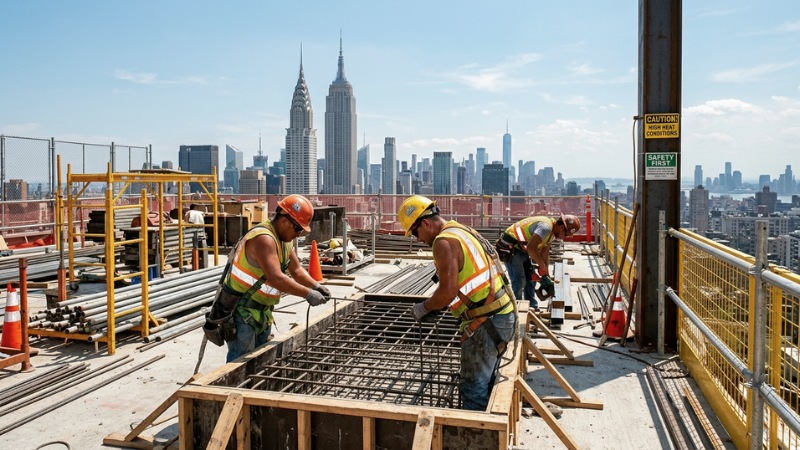
In New York City, summer construction activity often intensifies during June, July, and August. At the same time, projects may involve scaffolding, elevated surfaces, roadwork zones, and enclosed structures with limited airflow. These conditions are frequently examined when workplace incidents occur during periods of extreme heat.
Heat Illness Prevention and Workplace Investigations
When a worker experiences a heat-related medical emergency on a construction site, multiple factors may later be reviewed by agencies, employers, insurers, and legal representatives.
Investigations often examine:
- Weather and temperature conditions
- Length of exposure to outdoor heat
- Availability of shaded or cool rest areas
- Hydration access on the job site
- Physical demands of assigned work
- Protective equipment requirements
- Site supervision and scheduling practices
Federal agencies such as OSHA and NIOSH have published extensive information regarding heat exposure in physically demanding industries. OSHA’s “Water. Rest. Shade.” campaign has become one of the most widely recognized workplace heat awareness efforts in the United States.
According to NIOSH research, construction workers have historically experienced a disproportionate number of occupational heat-related fatalities compared to other industries.
Summer Construction Safety Concerns Across New York
Public safety research has examined whether elevated temperatures may contribute to fatigue, reduced concentration, and other workplace conditions that are sometimes reviewed following construction site incidents.
The CDC explains that heat stress may contribute to physical injuries because fatigue, sweating, dizziness, and impaired visibility can affect workers operating tools, machinery, ladders, or elevated equipment.
On large construction projects throughout New York City, these concerns may become even more significant due to:
- Reflective heat from nearby buildings
- Limited airflow between structures
- Heavy protective gear
- Long shifts during peak summer temperatures
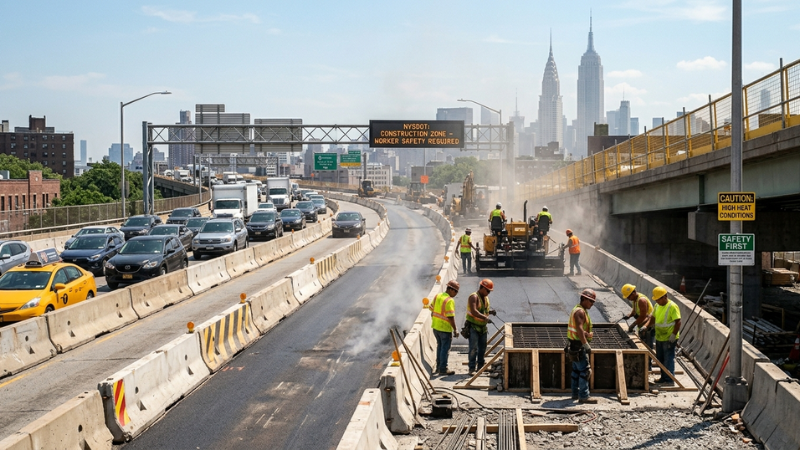
- Rooftop and roadway exposure
Following workplace incidents, investigators and other parties may review environmental conditions, job site activity, and operational factors relevant to the circumstances involved.
Heat Illness Prevention Discussions Continue Nationwide
As extreme summer temperatures become more common across the country, federal agencies and workplace organizations continue expanding discussions around Heat Illness Prevention standards and worker safety awareness.
Organizations including the CDC, NIOSH, and CPWR: The Center for Construction Research and Training regularly publish research focused on occupational heat exposure, construction injury trends, and workplace safety conditions.
These discussions often focus on how heat exposure intersects with construction schedules, physical exertion, and the broader responsibilities connected to workplace safety.
Construction-related injury matters may involve review of job site conditions, environmental factors, and workplace operations depending on the circumstances presented.
At William Schwitzer & Associates, our firm represents injured workers and families involved in construction accident and workplace injury matters throughout New York City.
Important:
This information is only a general guide and is NOT LEGAL ADVICE. Each case is different. The best option is to call our offices for specialized help, call (212) 683-3800 and contact William Schwitzer & Associates for legal assistance.
The images shown in this blog are for illustrative purposes only.