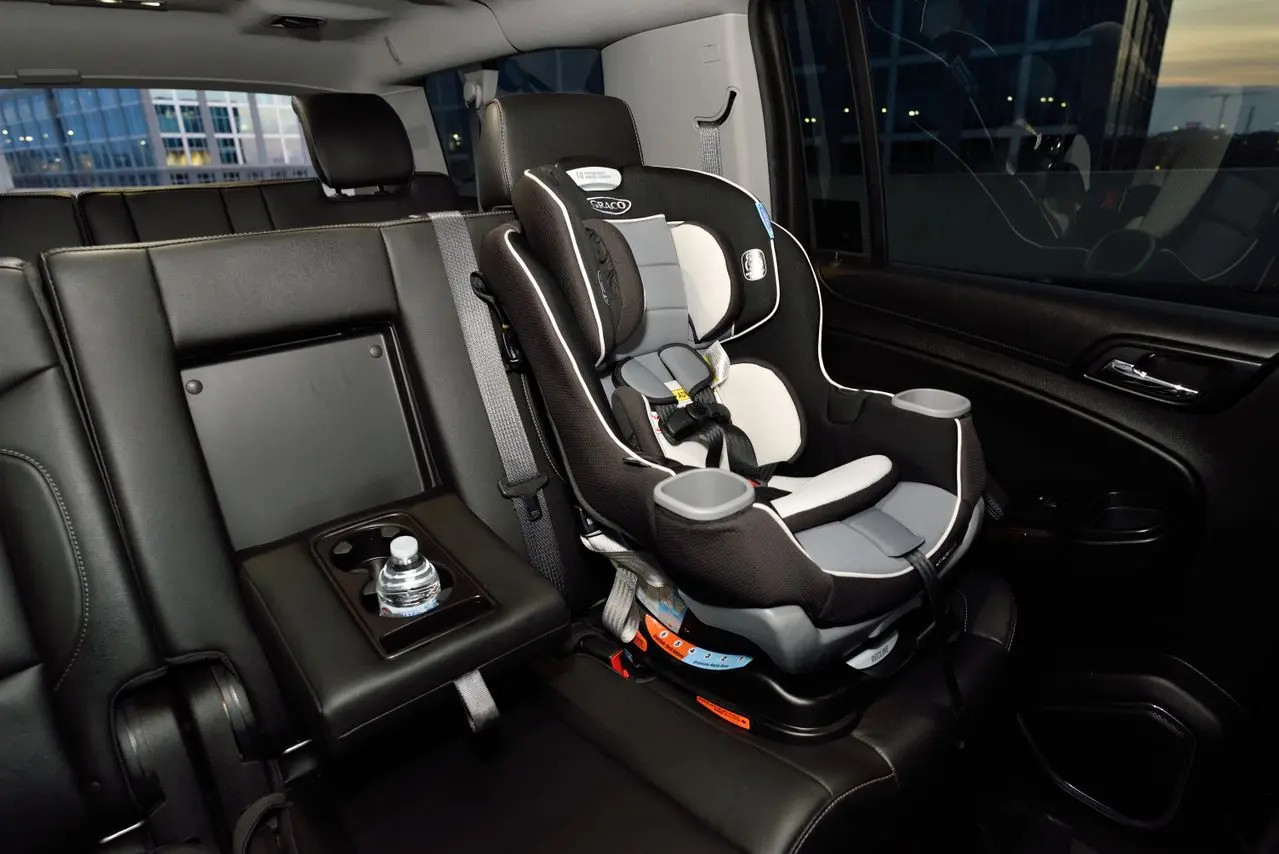
Child Passenger Safety Week puts an important crash issue in focus: child restraints can become part of the evidence examined after a serious collision.
Every September, the National Highway Traffic Safety Administration recognizes Child Passenger Safety Week to highlight the role of car seats and booster seats in protecting young passengers. NHTSA reports that car seats and booster seats provide important protection for children during crashes.
For families involved in a New York collision, however, a car seat can become relevant for another reason. Its use, condition, position, and relationship to a child’s injuries may become part of a broader review of what happened inside the vehicle.
Why Child Passenger Safety Week Matters After a Crash
Child passenger injuries remain a serious national concern. According to the Centers for Disease Control and Prevention, 1,019 child passengers age 14 and younger were killed in motor vehicle crashes in 2023, while more than 142,000 were injured. The CDC also reported that 43% of children killed in crashes that year were not buckled.
Research also shows that restraint systems can significantly affect injury risk. The CDC reports that car seat use reduces the risk of injury by 71% to 82% compared with seat belt use alone for children. Booster seats also reduce the the risk of serious injury for children ages four through eight compared with seat belts alone.
Those numbers help explain why restraint information may receive close attention when a crash involving a child is examined.

What Can Be Examined in a Crash Review?
A crash investigation may involve far more than vehicle damage.
The National Highway Traffic Safety Administration’s Crash Injury Research and Engineering Network provides an example of how detailed crash analysis can become. Its research examines vehicle damage, restraint systems, occupant positions, medical information, injury patterns, and crash forces when studying real-world collisions.
In a case involving a young passenger, similar categories of evidence may provide context. The type of restraint, where the child was seated, the condition of the car seat, how the restraint interacted with the vehicle, and the child’s documented injuries may all become relevant to understanding the mechanics of the collision.
NHTSA also distinguishes between minor crashes and more serious crashes when discussing car seats that have been involved in collisions. Its post-crash car seat guidance reflects the fact that crash severity and physical damage to a restraint can matter when assessing the seat after an impact.
New York Has Specific Child Restraint Requirements
New York’s occupant restraint rules establish specific requirements for children traveling in motor vehicles.
The New York Department of Motor Vehicles states that children under age four generally must be secured in a federally approved child safety seat. Children ages four through seven generally must use an appropriate child restraint system, subject to the requirements and exceptions identified in the law.
The statutory language appears in Vehicle and Traffic Law § 1229-c, which also defines an appropriate child restraint system in relation to federal standards and manufacturer size and weight recommendations.
Importantly, the statute draws a distinction between restraint compliance and responsibility for causing a crash.
Section 1229-c states that noncompliance with its restraint requirements is not admissible on the issue of liability in a civil action. However, the statute says it may be introduced regarding mitigation of damages when the required affirmative defense has been raised.
That distinction matters. The presence, absence, or use of a child restraint does not by itself establish who caused a collision.

Car Seat Evidence Is Only One Part of the Picture
Crash cases involving children can involve several separate questions. One concerns how the collision occurred. Another concerns how the impact affected the child inside the vehicle.
Vehicle damage, medical records, restraint evidence, photographs, witness accounts, roadway information, and other available materials can provide different pieces of that picture. The significance of any individual piece depends on the facts surrounding the particular collision.
During Child Passenger Safety Week, the attention placed on restraint systems also highlights their broader relevance after crashes occur.
William Schwitzer & Associates advocates for individuals and families affected by motor vehicle injuries throughout New York. When a collision involving a child raises questions about injury circumstances, restraint evidence, and responsibility, those issues can become part of a much larger legal review.
Important:
This information is only a general guide and is NOT LEGAL ADVICE. Each case is different. The best option is to call our offices for specialized help, call (212) 683-3800 and contact William Schwitzer & Associates for legal assistance.
The images shown in this blog are for illustrative purposes only.