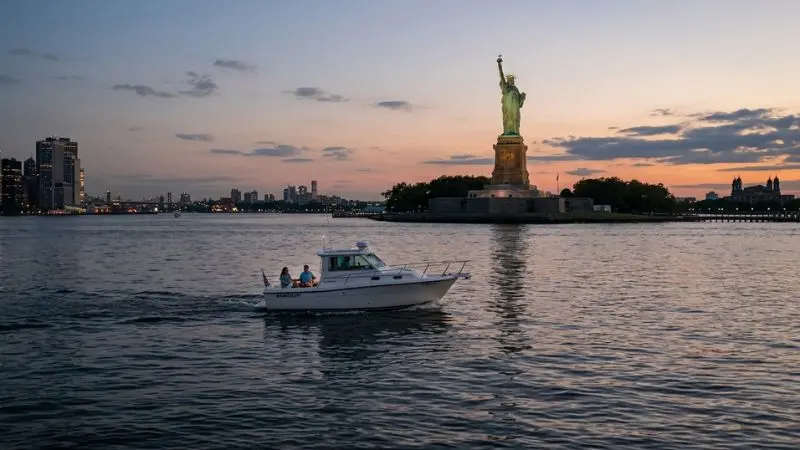
Boat capsized near Liberty Island after a nighttime outing, leaving a mother and her infant dead and raising questions about how fatal boating incidents are reviewed.
ABC7 New York reported that a recreational powerboat overturned near Liberty Island on Saturday night. Twelve other people were rescued. Authorities arrested the vessel’s operator, and the U.S. Coast Guard is participating in an investigation into the incident.
Officials are also examining whether the voyage was operating as an unauthorized passenger-for-hire charter, according to the report.
That question could become an important part of the the investigation. Fatal boating incidents can involve more than determining how a vessel overturned. Investigators may also examine the boat itself, the number of people aboard, safety equipment, operator conduct, weather and water conditions, and whether the voyage was recreational or commercial.
Boat Capsized Near Liberty Island: What Investigators May Review
The U.S. Coast Guard investigates certain marine casualties involving deaths, serious injuries, property damage, and other significant events.
According to the U.S. Coast Guard, marine investigations are intended to determine the causes of incidents and whether laws or regulations may have been violated.
A capsizing investigation can therefore extend beyond a single factor.
Investigators may review vessel specifications, passenger information, navigation conditions, safety equipment, communications, witness accounts, and other available evidence. The condition and operation of the vessel can also become relevant.
The National Transportation Safety Board separately investigates selected major marine accidents and explains that marine investigations can involve examination of vessels, records, physical evidence, and other information.
The existence of an investigation does not itself establish responsibility. It is the process through which authorities develop a factual record of what occurred.
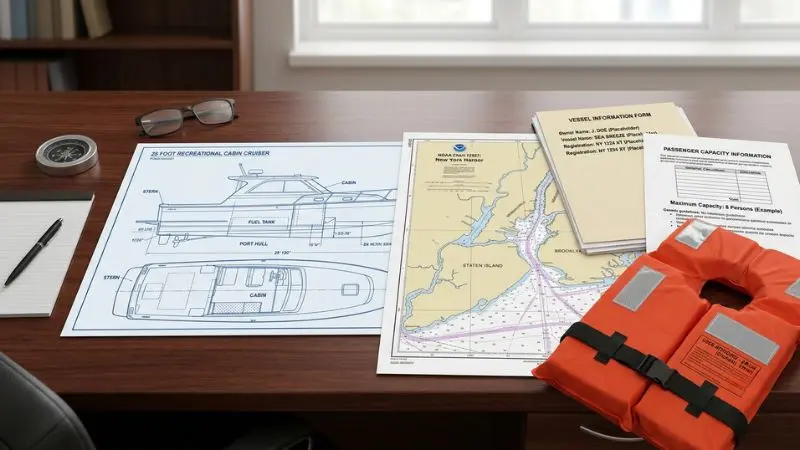
Passenger Capacity Can Become Part of the Review
The number of people aboard a vessel can be an important factual issue after a capsizing.
ABC7 reported that 14 people were aboard the boat involved in this incident. The vessel was described as a 22-foot bowrider. Rather than relying solely on a general description of what a particular type of boat may typically carry, investigators can examine the specific vessel and its manufacturer information.
Federal regulations require certain recreational boats to display capacity information. The Electronic Code of Federal Regulations contains federal requirements governing capacity labels for covered recreational vessels.
Capacity, however, is only one potential part of a broader investigation. The number of passengers does not by itself establish what caused a boat to capsize or who may ultimately bear legal responsibility.
Why the Reported Charter Question Matters
One particularly important issue is whether the outing was purely recreational or involved a passenger-for-hire arrangement.
The Coast Guard has specific requirements governing passenger vessel operations. According to the U.S. Coast Guard, illegal charter operations can involve vessels carrying passengers for hire without meeting applicable federal requirements.
Whether those rules apply to this particular incident depends on facts that remain under investigation.
The distinction can matter because commercial passenger operations may involve requirements concerning licensing, vessel documentation, inspections, safety equipment, and other regulatory obligations.
The U.S. Coast Guard National Maritime Center oversees merchant mariner credentialing, another part of the federal framework surrounding certain commercial vessel operations.
An allegation that a trip may have been an unauthorized charter is not the same as a finding that it was one. That determination depends on the evidence collected by authorities.
Criminal Charges and Civil Responsibility Are Different Questions
The boat operator was arrested following the incident, according to ABC7. Criminal charges do not establish guilt, and they do not automatically determine responsibility in a potential civil case.
Criminal proceedings and civil claims have different purposes and legal standards.
A criminal case concerns charges brought by government prosecutors. A civil case arising from a fatal boating incident can involve questions about negligence, vessel ownership, operation, maintenance, commercial relationships, and damages resulting from injuries or death.
Investigations can also identify organizations or individuals whose roles were not apparent from the earliest reports.
For that reason, the first public account of a boating tragedy rarely represents the complete legal picture.
A Fatal Boating Incident Can Involve Several Layers of Review
The investigation after a boat capsized near Liberty Island illustrates how a fatal marine incident can involve local law enforcement, federal authorities, vessel regulations, and potentially separate criminal and civil proceedings.
Questions surrounding passenger capacity, vessel operation, safety requirements, and the reported possibility of a passenger-for-hire charter may all receive scrutiny. None of those questions should be treated as resolved until investigators establish the relevant facts.
William Schwitzer & Associates advocates for individuals and families affected by serious and fatal accidents in New York. When a tragedy involves transportation, commercial activity, or multiple potentially responsible parties, the legal issues can extend well beyond what appears in an initial incident report.
Important:
This information is only a general guide and is NOT LEGAL ADVICE. Each case is different. The best option is to call our offices for specialized help, call (212) 683-3800 and contact William Schwitzer & Associates for legal assistance.
The images shown in this blog are for illustrative purposes only.