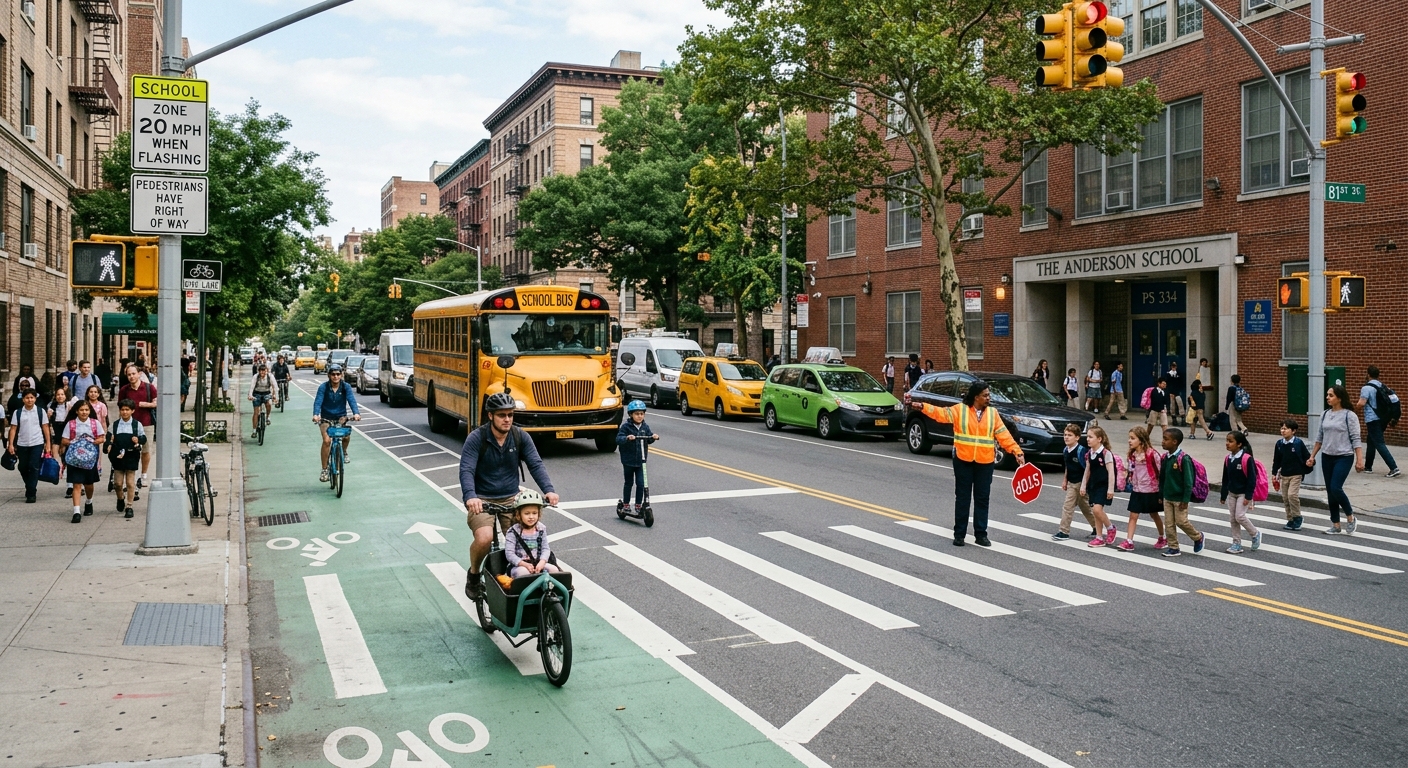
Back-to-School Traffic Safety returns to focus as New York City students head back to classrooms and streets around schools become busier again.
Yellow school buses, crossing guards, young pedestrians, cyclists, parents, delivery vehicles, and commuters can all share the same blocks during morning arrival and afternoon dismissal. In a city where traffic is already dense, the start of the school year changes the mix of people using the road.
That makes school transportation about much more than the the bus ride itself.
Back-to-School Traffic Safety Extends Beyond the School Bus
School buses remain one of the safest ways for children to travel.
The National Highway Traffic Safety Administration reports that less than 1% of traffic fatalities involving children occur in school transportation vehicles. However, NHTSA also notes that children face greater risks while approaching or leaving a school bus. NHTSA school bus safety data
That distinction matters in New York City. Students may move between buses, sidewalks, crosswalks, bike lanes, parked cars, and busy intersections before they ever enter a school building.
NHTSA found that from 2012 through 2021, 206 school-age children died in school-transportation-related crashes, including 78 children who were pedestrians. NHTSA school transportation research
These figures help explain why back-to-school traffic safety includes the streets surrounding buses and schools, not simply what happens inside a school vehicle.
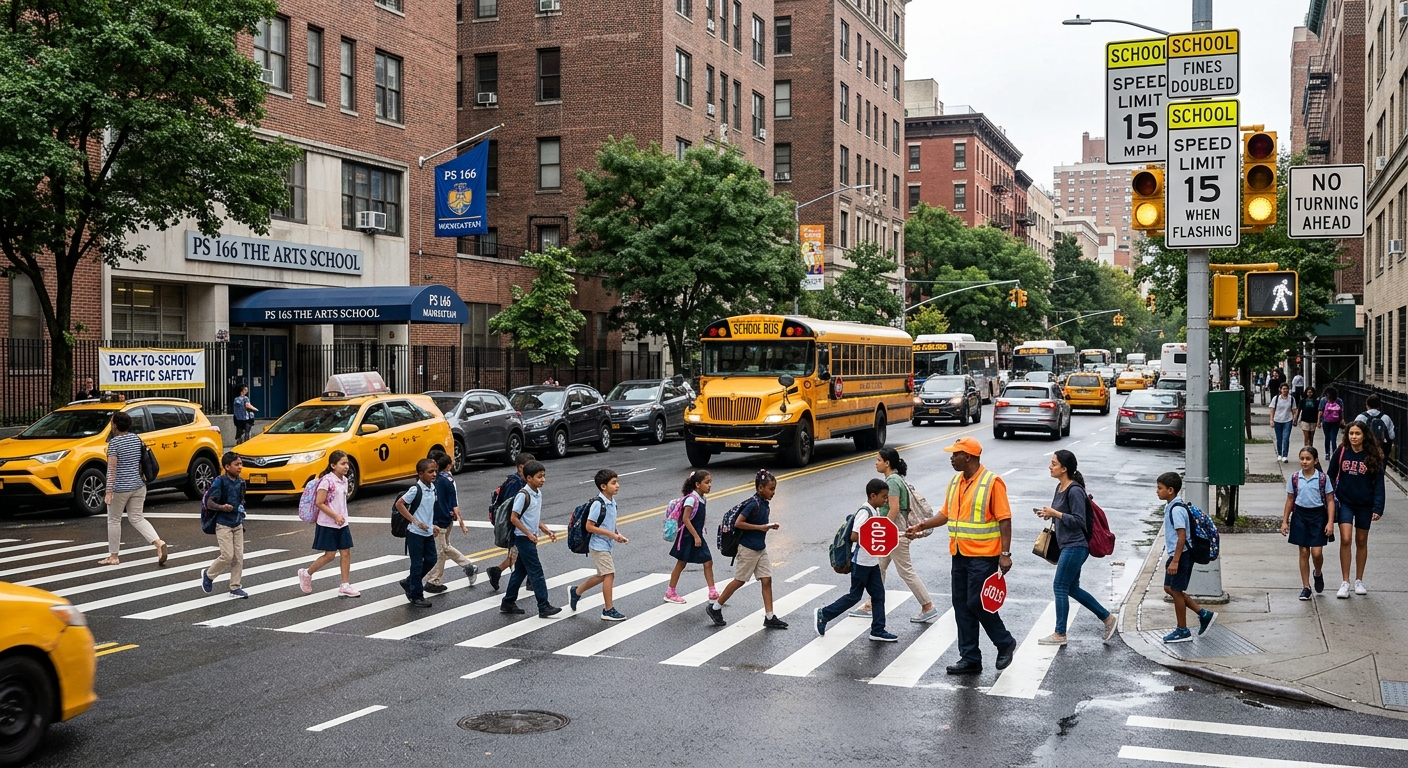
New York Has Broad Rules Around Stopped School Buses
One of the most important traffic rules surrounding school transportation involves flashing red lights.
The New York DMV Driver’s Manual states that traffic approaching a stopped school bus displaying flashing red lights is required to stop from either direction. The rule applies on all New York roadways, including when the bus is on the opposite side of a divided highway. Vehicles are required to stop at least 20 feet from the bus.
Yellow warning lights serve a different purpose. They indicate that a school bus is preparing to stop and load or discharge passengers.
The rules are designed around a particularly vulnerable moment: children moving between a bus and the surrounding roadway.
Illegal Passing Remains a Statewide Concern
Despite the visibility of school bus stop arms and red lights, illegal passing continues across New York.
The Governor’s Traffic Safety Committee cites an estimate from the New York Association for Pupil Transportation that approximately 50,000 motorists pass stopped school buses with flashing red lights statewide on an average school day.
Nationally, the issue is also significant. NHTSA describes illegal school bus passing as a serious risk because students may be crossing the roadway while buses are loading or unloading. NHTSA illegal school bus passing research
For New York families, those numbers place school bus rules within the larger question of pedestrian safety near schools.
NYC School Zones Are Changing in 2026
This year also brings a significant change to streets surrounding New York City schools.
In March 2026, New York City announced that more than 800 additional school locations will receive 15 mph School Slow Zones during 2026, bringing the citywide total to nearly 1,300 locations by the end of the year. NYC School Slow Zone announcement
The expansion places lower speed limits around substantially more schools across the five boroughs.
Speed enforcement is also part of that environment. NYC school-zone speed cameras operate 24 hours a day, seven days a week, according to NYC 311.
Together, lower-speed school zones and automated enforcement show how traffic policy increasingly focuses on the streets children use before and after class.

Children Are Part of a Larger NYC Traffic System
A child traveling to school may be a bus passenger for one part of the trip and a pedestrian for another. Some students also travel by bicycle, subway, family vehicle, or on foot.
NHTSA’s back-to-school materials recognize this broader transportation picture by addressing school buses, pedestrians, cyclists, and motorists together. NHTSA Back to School safety information
In New York City, that broader view is especially relevant. School transportation unfolds within one of the country’s busiest street networks.
Back-to-School Traffic Safety Puts NYC Streets in Focus
Back-to-School Traffic Safety is ultimately about the moments when children and city traffic meet: outside a bus, at a crosswalk, beside a bike lane, or along a crowded school block.
When a traffic collision causes serious injuries, the effects can extend far beyond the roadway.
William Schwitzer & Associates advocates for individuals and families affected by motor vehicle, pedestrian, and bicycle injuries throughout New York. WSAT Law stands with injured New Yorkers and their families throughout the legal process.
Important
This information is only a general guide and is NOT LEGAL ADVICE. Each case is different. The best option is to call our offices for specialized help, call (212) 683-3800 and contact William Schwitzer & Associates for legal assistance.
The images shown in this blog are for illustrative purposes only.