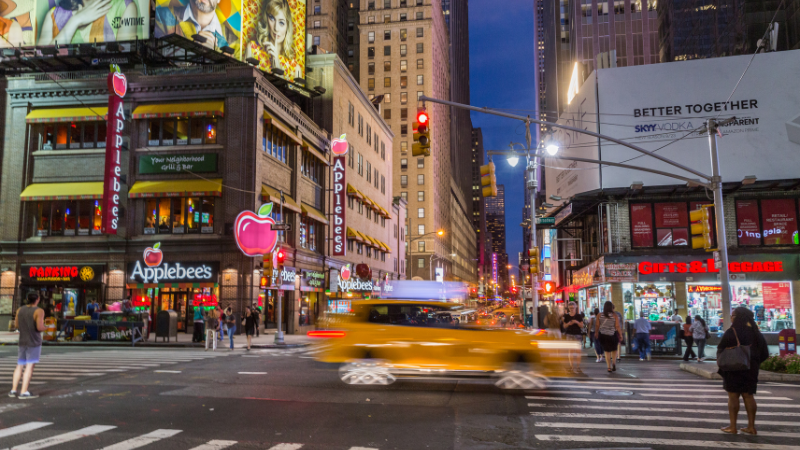
Wrong way crash in Manhattan draws immediate public attention because of how suddenly and violently they can unfold. A recent fatal collision in Manhattan involving a vehicle traveling against traffic was reported by authorities, who indicated that criminal charges were filed in connection with the the incident.
While criminal proceedings may follow in some cases, fatal traffic collisions are also reviewed through a separate civil liability process. These reviews focus on responsibility, roadway conditions, and whether preventable risks were present.
Wrong-way driving is particularly dangerous in dense urban neighborhoods like Manhattan. Narrow streets, parked cars, limited visibility, and heavy pedestrian movement increase the likelihood of catastrophic injury when a vehicle moves against the designated flow of traffic.
According to the National Highway Traffic Safety Administration, wrong-way crashes are relatively rare but often severe because they frequently involve head-on impacts (https://www.nhtsa.gov/road-safety). Federal safety data consistently shows that head-on and opposite-direction crashes carry a higher risk of fatal injury compared to other types of collisions.
In a city environment, that danger extends beyond vehicle occupants. Pedestrians crossing at intersections may have little time to react if a vehicle approaches from an unexpected direction.
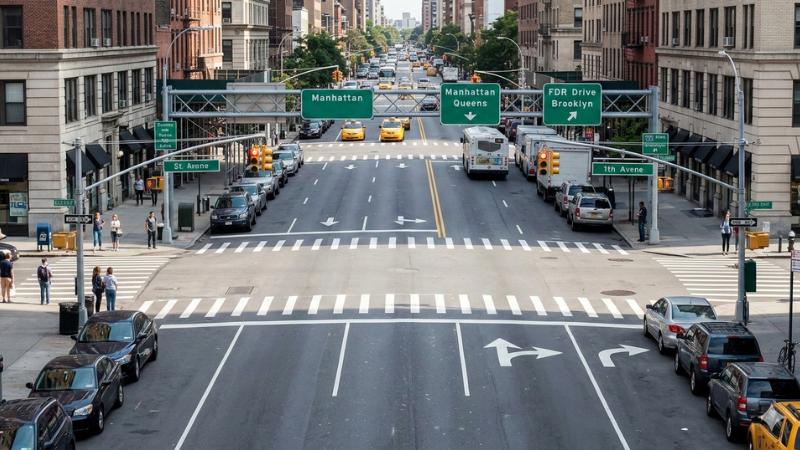
Wrong Way Crash in Manhattan: How Fatal Traffic Collisions Are Reviewed
When a fatal crash occurs, authorities and other relevant entities may review multiple contributing factors. These reviews are not limited to whether a driver violated traffic rules. They often include:
-
Traffic flow design and signage
-
Visibility conditions at the intersection
-
Signal timing and street markings
-
Driver conduct and roadway awareness
-
Whether prior complaints or safety concerns existed
The New York City Department of Transportation oversees roadway design and traffic controls throughout the city (https://www.nyc.gov/html/dot/html/home/home.shtml). Street direction, signage placement, and intersection visibility are part of broader traffic safety planning.
In civil cases involving pedestrian fatalities, the legal process may consider whether reasonable care was exercised under the circumstances. That analysis can involve crash reconstruction, witness accounts, traffic camera footage, and roadway engineering review.
Criminal charges, when filed, operate under a different standard. Prosecutors must establish specific legal elements tied to criminal statutes. Civil proceedings, by contrast, examine whether negligence contributed to the fatal outcome and whether damages are recoverable under wrongful death laws.
According to the Centers for Disease Control and Prevention, motor vehicle crashes remain a leading cause of injury-related death in the United States (https://www.cdc.gov/transportation-safety/global/index.html). In high-density cities like New York, pedestrian fatalities are a significant component of traffic safety discussions.
New York City has implemented traffic safety initiatives under its Vision Zero program, aimed at reducing roadway deaths (https://www.nyc.gov/site/visionzero/index.page). These efforts include redesigning intersections, lowering speed limits in certain areas, and increasing enforcement of hazardous driving behaviors.
However, even with safety initiatives in place, fatal collisions still occur. When they do, official reviews may consider factors such as street conditions, signage visibility, and whether traffic controls were functioning properly.
In wrongful death cases, courts may also examine the economic and personal losses experienced by surviving family members. These cases often involve detailed financial documentation, medical records, and expert assessments.
Importantly, public commentary or online reaction does not determine legal responsibility. Liability findings are based on evidence, documentation, and established legal standards. Each fatal collision is assessed individually, with careful review of facts rather than assumptions.
Urban wrong-way crashes can raise broader safety questions about driver behavior, street familiarity, and navigation errors. In some cases, authorities may examine whether traffic direction was knowingly disregarded, based on available evidence. In others, confusion, impairment, or distraction may become part of the factual review.

For families affected by fatal pedestrian crashes, the civil justice process is designed to evaluate accountability and financial damages within structured legal frameworks. These proceedings are separate from criminal court outcomes and follow different evidentiary standards.
At William Schwitzer & Associates, our role is to advocate for individuals and families harmed in serious traffic collisions. Fatal pedestrian cases involve complex review of roadway design, driver conduct, and long-term financial impact. They are examined carefully within established legal processes focused on accountability.
Wrong way crash in Manhattan highlights how a single traffic violation can intersect with larger questions of road safety, enforcement, and civil responsibility in one of the most densely populated cities in the country.
Important:
This information is only a general guide and is NOT LEGAL ADVICE. Each case is different. The best option is to call our offices for specialized help, call (212) 683-3800 and contact William Schwitzer & Associates for legal assistance.
The images shown in this blog are for illustrative purposes only.