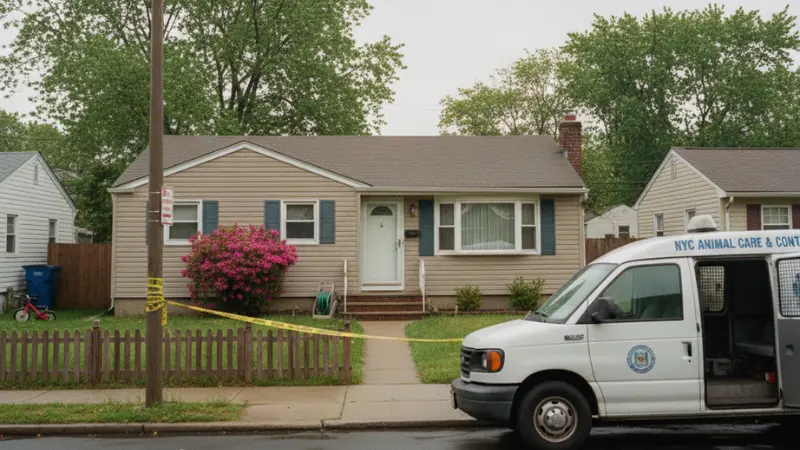
Staten Island Dog Attack, a tragic incident inside a Staten Island home, has left a 59-year-old man dead and raised serious questions about safety, responsibility, and what happens next when a dog attack turns fatal.
According to the NYPD, officers responded to a reported dog attack inside a Staten Island residence, where a man was found with fatal injuries. Police found the man suffering from multiple wounds consistent with dog bites. He was pronounced dead at the scene. The Office of the Chief Medical Examiner will determine the official cause of death.
The incident was first reported by PIX11 News and credited to Spencer Gustafson. Authorities confirmed that the the dog involved was taken into custody by the ASPCA. No arrests have been made, and the investigation remains ongoing.
What Investigators Typically Review in Fatal Dog Attacks
Details surrounding the Staten Island Dog Attack are still limited. What has been confirmed is that the incident occurred inside a private home and involved repeated bites. Investigators are working to understand the circumstances leading up to the attack, including the dog’s history, ownership, and whether there were any prior warning signs.
Fatal dog attacks are rare, but when they occur, they often involve complex factors. These may include confinement, lack of supervision, or prior aggressive behavior. According to the Centers for Disease Control and Prevention, millions of people are bitten by dogs each year in the U.S., but only a small percentage result in death. Still, each fatal case prompts close review by authorities and animal control officials.

How New York Law Looks at Fatal Dog Attacks
In New York, dog owners can be held legally responsible if their animal causes serious injury or death. State law allows for liability when a dog has known dangerous propensities or when an owner fails to take reasonable steps to prevent harm.
New York Agriculture & Markets Law §123 outlines procedures for declaring a dog “dangerous” and authorizes investigations after severe attacks.
In cases like this Staten Island Dog Attack, investigators may review:
-
Prior complaints or bite history
-
Whether the dog was properly restrained
-
The relationship between the dog and the victim
-
Compliance with local animal control regulations
These reviews help determine whether civil claims may follow, even if no criminal charges are filed.
Why These Investigations Matter
When a fatal dog attack occurs, it impacts more than one family. Neighbors, visitors, and the broader community are left with concerns about safety and accountability. Investigations help clarify what went wrong and whether steps could have been taken to prevent the tragedy.
According to New York City health data, dog bite incidents are tracked to identify risk patterns and improve prevention efforts.
While authorities continue their review, families affected by fatal attacks often face sudden emotional and financial burdens. Medical costs, funeral expenses, and unanswered questions can follow closely behind the initial shock.
Legal Options After a Fatal Dog Attack
Each Staten Island Dog Attack case is unique. In some situations, surviving family members may have the right to pursue a wrongful death claim. These claims are civil actions and focus on accountability and financial recovery, not punishment.
At William Schwitzer & Associates, our role is to advocate for individuals and families after serious injuries or loss. We help review the facts, explain options, and guide families through the legal process with care and clarity. We do not determine guilt or conduct investigations, but we stand up for those harmed when preventable incidents occur.
Staten Island Dog Attack: What Comes Next
As authorities continue to review this tragic Staten Island Dog Attack, more details may emerge about how and why it happened. Until then, the focus remains on the investigation and ensuring that proper procedures are followed.
If you or your family has been affected by a serious dog attack in New York City, speaking with an experienced personal injury law firm can help you understand your rights and next steps.
Important:
This information is only a general guide and is NOT LEGAL ADVICE. Each case is different. The best option is to call our offices for specialized help, call (212) 683-3800, and contact William Schwitzer & Associates for legal assistance.
The images shown in this blog are for illustrative purposes only.