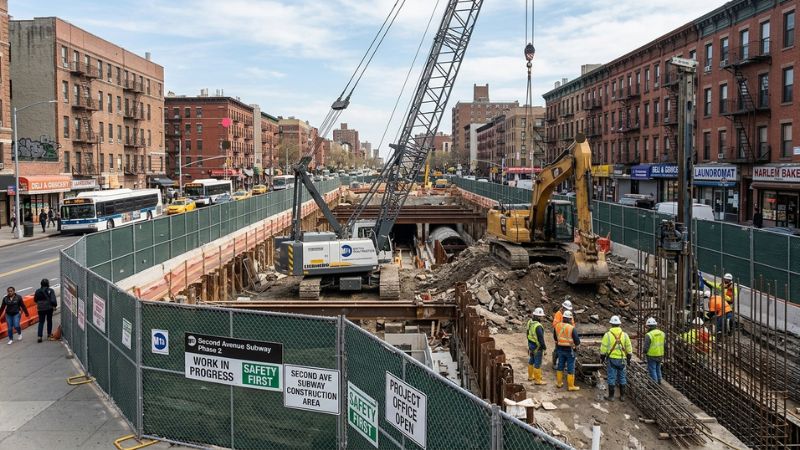
Major infrastructure projects involve large workforces, specialized equipment, and evolving jobsite conditions. As a result, incidents reported during Second Avenue Subway Construction may receive public attention because of the project’s size and significance within New York City’s transportation system.
According to publicly available reports, a construction worker was injured during work associated with the the second avenue subway project in East Harlem on July 8, 2026. Public officials reported that emergency responders assisted the worker, who was transported to a hospital in stable condition. Reports also indicated that work at the site was temporarily paused for a safety standdown while project operations were reviewed. Publicly available information regarding the incident remains limited, and any official review processes may continue independently.
Second Avenue Subway Construction Involves Complex Work Environments
Large transit construction projects commonly include excavation, underground utility work, heavy equipment, temporary access areas, and changing site conditions. The nature of these projects often requires coordination among contractors, engineers, project managers, and other participants throughout different phases of construction.
When a workplace incident is reported on a project of this scale, organizations involved may conduct reviews to better understand the circumstances surrounding the event. These reviews can include evaluating available information, documenting site conditions, and examining project procedures as appropriate.
As of this writing, publicly available information has not fully described the circumstances surrounding the reported East Harlem incident.
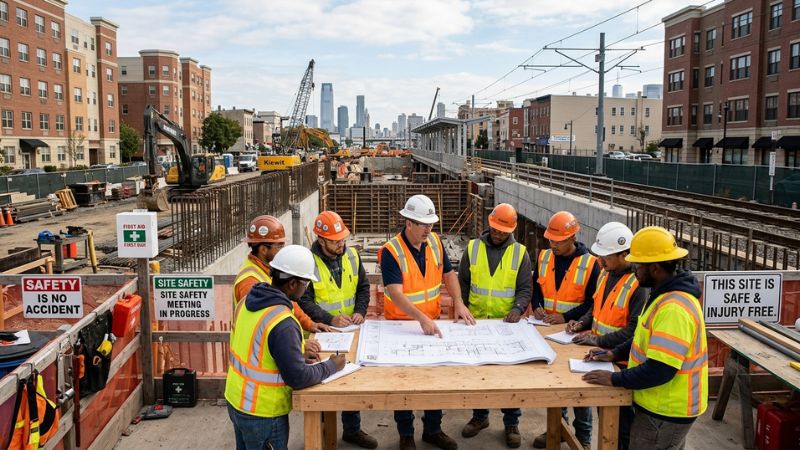
Understanding Safety Standdowns on Construction Projects
Following the reported East Harlem incident, the Metropolitan Transportation Authority announced a safety standdown for the remainder of the workday. OSHA describes a safety standdown as a voluntary pause in work that allows employers and workers to discuss workplace hazards, review safety practices, and reinforce awareness before work resumes.
A safety standdown does not, by itself, establish the cause of an incident or indicate that any person or organization violated applicable requirements. Its purpose may vary depending on the circumstances of a particular project.
How Construction Site Incidents May Be Reviewed
The review of a reported construction incident may differ depending on the project, the reported circumstances, and the organizations involved.
Review activities may include consideration of:
- The work activity taking place at the time of the reported incident.
- Conditions present within the work area.
- Equipment or protective systems associated with the work.
- Relevant project documentation and workplace procedures.
- Information collected from individuals participating in the review process.
For publicly funded infrastructure projects, multiple entities may participate in reviewing different aspects of a reported workplace incident, consistent with their respective responsibilities.
Each incident involves its own facts, and publicly available information may develop over time as official processes continue.
Fall Hazards in the Construction Industry
Falls continue to receive significant attention throughout the construction industry because they are associated with a substantial number of serious workplace injuries and fatalities.
According to the Occupational Safety and Health Administration (OSHA), falls remain the leading cause of death in the construction industry, accounting for 389 fatal falls to a lower level out of 1,034 construction fatalities in 2024. OSHA continues to emphasize fall prevention through its nationwide Fall Prevention Campaign.
The National Institute for Occupational Safety and Health (NIOSH) reports that construction workers accounted for 49% of all fatal occupational slips, trips, and falls nationwide, highlighting why fall hazards continue to receive significant attention across the industry.
Excavation and underground construction projects present additional workplace considerations because site conditions may change during active construction. Public health and workplace safety agencies have published guidance addressing hazards commonly associated with excavation work.
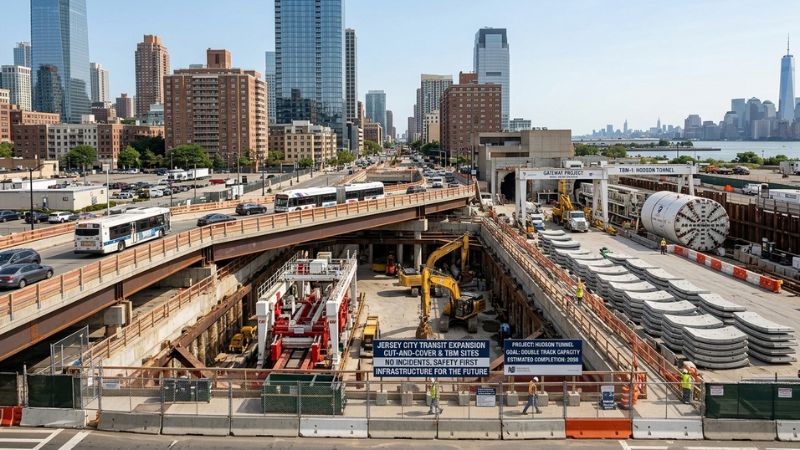
Why Public Infrastructure Incidents Receive Attention
The Second Avenue Subway expansion is one of New York City’s major transportation projects. Because projects of this size involve extensive construction activity over an extended period, reported workplace incidents may receive public attention and prompt discussion regarding construction practices, project management, and workplace safety processes.
As additional information becomes publicly available through official sources, the reported circumstances surrounding a particular incident may become clearer. Until then, publicly reported information may remain limited.
Construction incidents can involve many different factors, and each situation depends on its own facts. William Schwitzer & Associates represents individuals in construction injury matters throughout New York and recognizes that every case involves unique circumstances.
Important:
option is to call our offices for specialized help, call (212) 683-3800 and contact William Schwitzer & Associates for legal assistance.
The images shown in this blog are for illustrative purposes only.