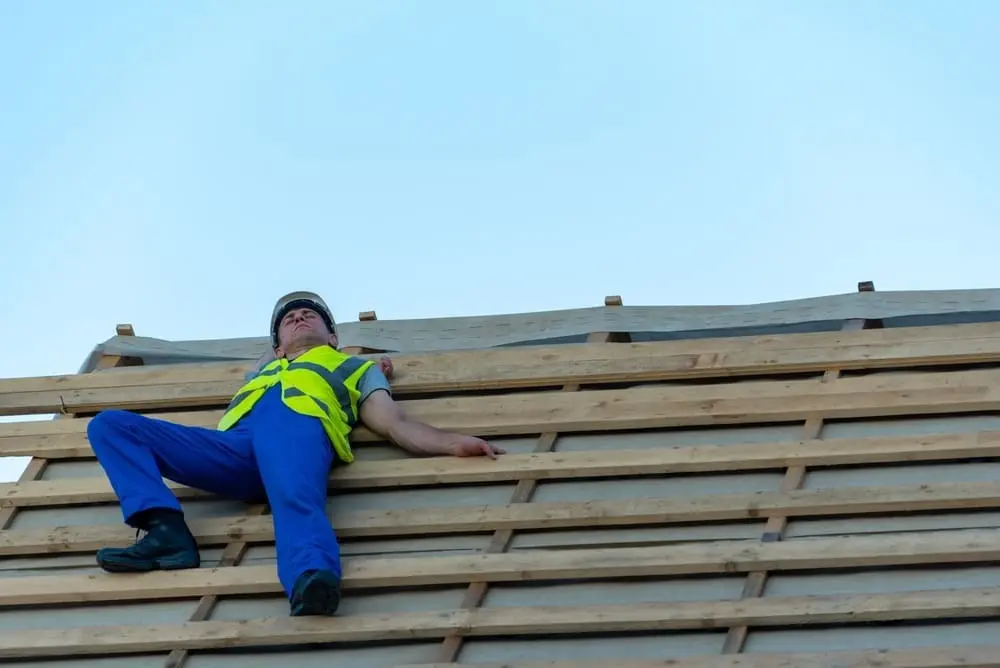
Roofing is hard, dangerous work, but your employer is obligated to put certain protections in place to prevent falls and other accidents. If you were injured while working on a roof, you likely have the right to seek workers’ compensation. But you may also have other legal options for pursuing reimbursement from a negligent party.
Consulting an NYC construction accident lawyer can help you understand your rights and options for moving forward under New York law.
Common Causes of Roofing Accidents in NYC
According to the Deadly Skyline Report on construction fatalities in New York State, 55 construction workers died statewide in 2024, including 19 in New York City alone. While little data exists specifically on roofing injuries, OSHA considers falls one of the “Fatal Four” leading causes of construction deaths. Falls accounted for approximately 37% of deaths in the construction industry at large in 2021.
Roofing accidents, in particular, can happen due to a few different causes:
- Falls from the edges of the roof: This is a leading cause of roof accidents that can result in severe injuries. Roofers need to exercise extreme caution when working near unsecured perimeters.
- Falling through roof openings: Construction work often leaves gaps or holes in the roof that pose serious hazards for roofers. This can also occur near skylight openings, which is why OSHA requires guardrails or covers around them.
- Roof collapses: When a roof is structurally unstable, standing and working on it can cause it to fail under the weight of workers.
- Falling from ladders or scaffolds: Working on a roof often involves standing on ladders or scaffolds, which can increase the risk of falls and injuries.
- Heat stroke and illness: Working on a roof in the summer can cause workers to overheat quickly and experience heat stroke or related illnesses.
The cause of your roofing accident can impact your options for seeking compensation and moving forward. An NYC construction accident lawyer can review your case and help you understand your legal options.
Understanding OSHA Standards and Industrial Codes That Protect Roofers Against Falls
The Occupational Health and Safety Administration (OSHA) has several standards in place to prevent falls and other accidents on construction sites. Worksites are required to comply with OSHA standards, and failing to do so can result in formal citations and financial penalties.
The following standards have been put in place to help prevent roofing accidents:
- 29 CFR 1926.501: OSHA’s “Duty to Have Fall Protection.” This standard mandates that employers provide fall protection for employees working or walking on a surface with unprotected sides or edges that are at least 6 feet above a lower level. OSHA permits certain fall protection systems, such as warning lines, in specific low-slope roofing situations.
- 29 CFR 1926.502: Sets standards for fall protection systems on construction sites, including minimum performance and structural requirements for systems like guardrails, covers, safety nets, and personal fall arrest systems.
- 29 CFR 1926.503: Sets training requirements for fall protection in the construction industry. This standard requires every employee exposed to fall hazards to be trained by a competent person, and training must cover hazard recognition and how to use fall protection systems.
Several New York Industrial Codes also mandate safety requirements for construction workers and roofers. These codes are often more specific and protective than OSHA requirements.
- 12 NYCRR 23-1.7(b): Requires protective measures against falling and stepping into hazardous openings on construction sites. All hazardous openings, including skylights on roofs, must be guarded by a substantial cover fastened in place or by a safety railing.
- 12 NYCRR 23-1.7(d): Mandates anti-slip protections on construction, demolition, and excavation sites. Wet or icy roofs can be considered slipping hazards.
- 12 NYCRR 23-2.4: Requires construction sites to have permanent or temporary flooring in tiered building construction and structural steel assembly.
- 12 NYCRR 23-1.21: Mandates safety standards for ladders and ladderways on construction sites, including strict rules for ladder strength, maintenance, material, and usage.
Your roofing accident lawyer in New York can help you understand whether any violations of OSHA standards or industrial codes were at play when your accident occurred. If so, you may have grounds for legal action against a liable party, depending on the circumstances.
Pursuing Action Under New York’s Scaffold Law
Accidents involving falls from heights sometimes fall under New York Labor Law 240, known as the Scaffold Law. This law holds property owners and general contractors strictly liable for failing to ensure the proper safety devices were in place for workers performing work at heights. Required safety devices may include scaffolding, ladders, hoists, and harnesses, depending on the equipment being used.
If you fell and became injured while performing a job in which the necessary safety devices were not in place, you may be able to hold the property owner or general contractor liable even if they were not technically responsible for your accident or if you contributed to it. This means you may be able to pursue legal action against this party.
A construction accident attorney can review the details of your accident and help you understand whether the Scaffold Law may apply.
Workers’ Compensation Laws for Roofing Accidents in New York
Regardless of how your accident occurred or who was at fault, you likely qualify for workers’ compensation if it happened in the course of your job duties. This is a benefit that most employers in New York are required to provide to their workers. It is a no-fault system, meaning you can qualify even if you were technically responsible for your own accident.
Workers’ compensation provides workers with reimbursement for necessary medical expenses related to the accident. It can also provide up to two-thirds of your average weekly wages if you are off work for an extended period while recovering.
You can seek workers’ compensation by following these steps:
- Notify your employer of the accident in writing within 30 days of your injury. You must generally provide written notice.
- Seek medical treatment from an authorized provider. After you tell them that your injury is work-related, they will be required to submit medical reports directly to the Workers’ Compensation Board.
- File Form C-3 with the NYS Workers’ Compensation Board. You can do so online, by phone, or by mail.
Because workers’ compensation is a no-fault system, you would generally be barred from holding your employer liable for your injuries. However, you may still have the right to hold a third party liable as well, such as a property owner or general contractor, and seek additional compensation from them.
What Damages Can You Seek in a Roofing Accident Lawsuit?
If a third party was negligent in your worksite accident, you may have the right to pursue a personal injury lawsuit against them for your injuries and damages. This could allow you to seek both economic and non-economic damages not covered by workers’ compensation or other claims.
Potential economic damages may include:
- Medical bills
- Lost wages
- Loss of future earning capacity
Meanwhile, you may also be able to pursue non-economic damages, which account for the physical and emotional toll the accident has taken on you. These may include:
- Pain and suffering
- Loss of quality of life
- Emotional distress
- Mental anguish
To have a successful personal injury lawsuit, you would need to prove that the defendant owed you a duty of care and breached that duty and that you suffered injuries or other damages in an accident caused by the breach. Construction accident lawyers in NYC have extensive experience navigating these cases and can help you understand whether your accident meets these criteria.
Consult a Construction Accident Lawyer in New York
Roofers shouldn’t have to put their health and safety on the line for the sake of a job. If you were injured in a roofing accident, you have options for seeking compensation.
Our attorneys at William Schwitzer & Associates, PC, can help you explore those options and protect your rights as an injured worker. We help clients understand causes and liability for construction accidents and move forward with legal action against liable parties.
Contact us today at (212) 683-3800 to request a free case evaluation with an NYC construction accident lawyer.
Frequently Asked Questions
Can you sue your employer after a roofing accident in New York?
You generally cannot hold your employer liable for an on-the-job accident in New York. Instead, you would have the option to pursue workers’ compensation. The main exceptions are if your employer intentionally caused your injuries or does not offer workers’ compensation.
What is the statute of limitations for roofing accident lawsuits in NY?
The statute of limitations for roofing accident lawsuits in New York is generally three years from the accident date. Exceptions can apply, so be sure to consult an NYC construction accident lawyer to avoid missing the filing deadline.
Are roofers required to use fall protection in New York?
Yes, roofers are required to use fall protection when working at heights of 6 feet or more above a lower level. Fall protection devices may include personal fall arrest systems, warning lines and safety monitoring systems, guardrails, and/or safety nets, depending on the worksite.