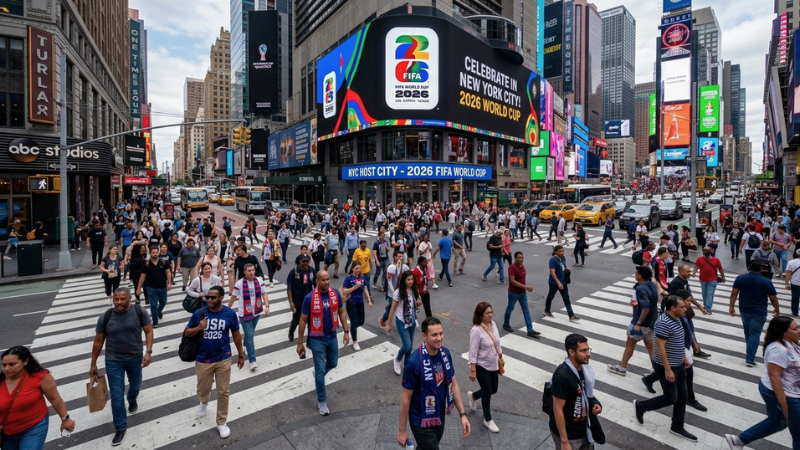
What happens when millions of additional visitors move through New York City at the same time?
With the upcoming FIFA World Cup expected to bring a surge of global activity, city agencies are already adjusting how streets function—especially in areas where pedestrian traffic is highest.
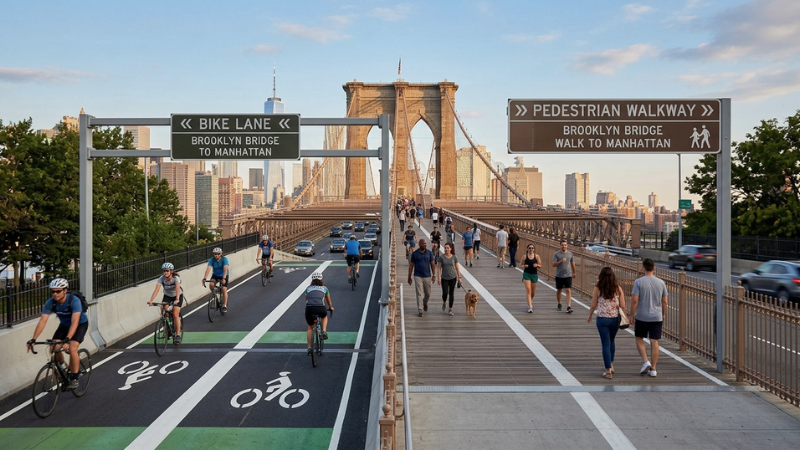
According to the New York City Department of Transportation, several street redesign projects are underway, including major updates near the Brooklyn Bridge, aimed at improving how pedestrians and cyclists move through some of the city’s most crowded corridors.
How NYC Streets Redesigned Ahead of the 2026 World Cup
One of the most notable projects focuses on the Manhattan entrance to the Brooklyn Bridge, where high volumes of pedestrians and cyclists currently share limited space.
The redesign includes:
- A dedicated bike connection to separate cyclist movement
- Expanded pedestrian crosswalks near City Hall Park
- Reconfigured entry points to reduce congestion
These changes reflect how New York City streets are being redesigned ahead of the World Cup to better manage overlapping traffic patterns in high-demand areas.
Why Pedestrian Safety Becomes a Focus During Major Events
Large-scale events often bring temporary increases in foot traffic, particularly in well-known areas like Lower Manhattan. In these environments, pedestrian movement can intersect with cyclists, vehicles, and public transportation systems within a limited space.
Agencies such as the Federal Highway Administration study how roadway design and pedestrian infrastructure influence traffic outcomes across urban settings.
Source: https://www.fhwa.dot.gov/
Similarly, the National Highway Traffic Safety Administration tracks patterns in roadway incidents, including those involving pedestrians.
Source: https://www.nhtsa.gov/
Increased density does not automatically lead to incidents, but it often becomes a factor that is reviewed when conditions are evaluated.
How NYC DOT Is Addressing High-Traffic Corridors
Beyond the Brooklyn Bridge, the New York City Department of Transportation has outlined additional improvements across Manhattan.
These include:
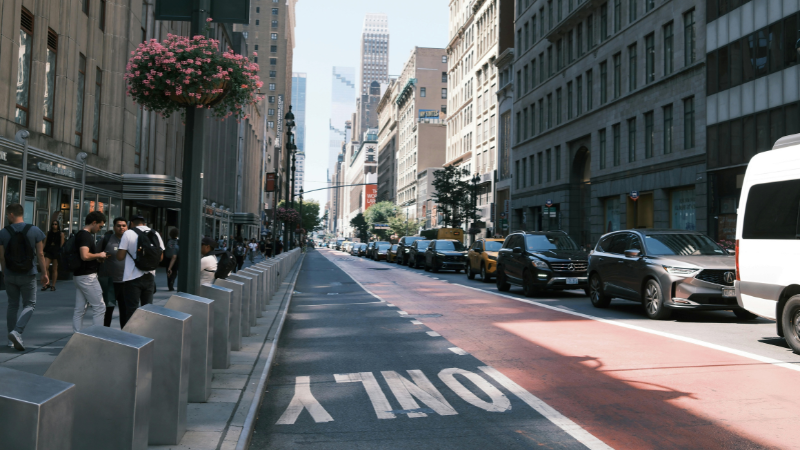
- Widening sidewalks in heavily used areas such as Ninth Avenue
- Expanding protected bike lanes
- Improving connections between Lower Manhattan and Union Square
Each of these updates reflects how New York City streets are being redesigned ahead of the World Cup with attention to movement, spacing, and coordination between different types of road users.
How Street Design Is Typically Evaluated in Legal Contexts
Street layout and traffic flow are often part of broader reviews when incidents occur in dense urban environments.
These reviews may consider:
- How pedestrians, cyclists, and vehicles share space
- Visibility at intersections and entry points
- Whether congestion influenced movement patterns
- The design of crosswalks, signals, and access points
Organizations like the Centers for Disease Control and Prevention recognize traffic-related incidents as a public safety concern, contributing data used to evaluate how environments function.
Source: https://www.cdc.gov/transportationsafety/index.html
In areas preparing for large-scale events, these factors are often viewed together rather than in isolation.
Why These Changes Extend Beyond the World Cup
Although these redesigns are being implemented ahead of an international event, many are intended to remain in place long-term.
Urban infrastructure projects often reflect:
- Ongoing pedestrian demand
- Daily commuter patterns
- Tourism-heavy areas that remain active year-round
In New York City, locations like the Brooklyn Bridge serve both residents and visitors, making them a consistent focus of evaluation regardless of a specific event.
A Broader Perspective on Pedestrian Movement in NYC
As New York City streets are being redesigned ahead of the World Cup, the changes highlight how the city adapts to shifting demands in real time.
These projects reflect:
- Anticipated increases in foot traffic
- The need for clearer separation between different types of movement
- Continued evaluation of how public spaces operate under pressure
While the World Cup may accelerate these updates, the underlying focus remains on how people move safely through complex, high-density environments.
Closing Perspective
The redesign of key areas like the Brooklyn Bridge shows how New York City is preparing for increased pedestrian activity tied to the World Cup. These efforts are part of broader evaluations of how streets function when demand rises.
At William Schwitzer & Associates, we represent individuals and families affected by incidents in busy city environments, providing support as they navigate the legal process following unexpected events.
Important:
This information is only a general guide and is NOT LEGAL ADVICE. Each case is different. The best option is to call our offices for specialized help, call (212) 683-3800 and contact William Schwitzer & Associates for legal assistance.
The images shown in this blog are for illustrative purposes only.