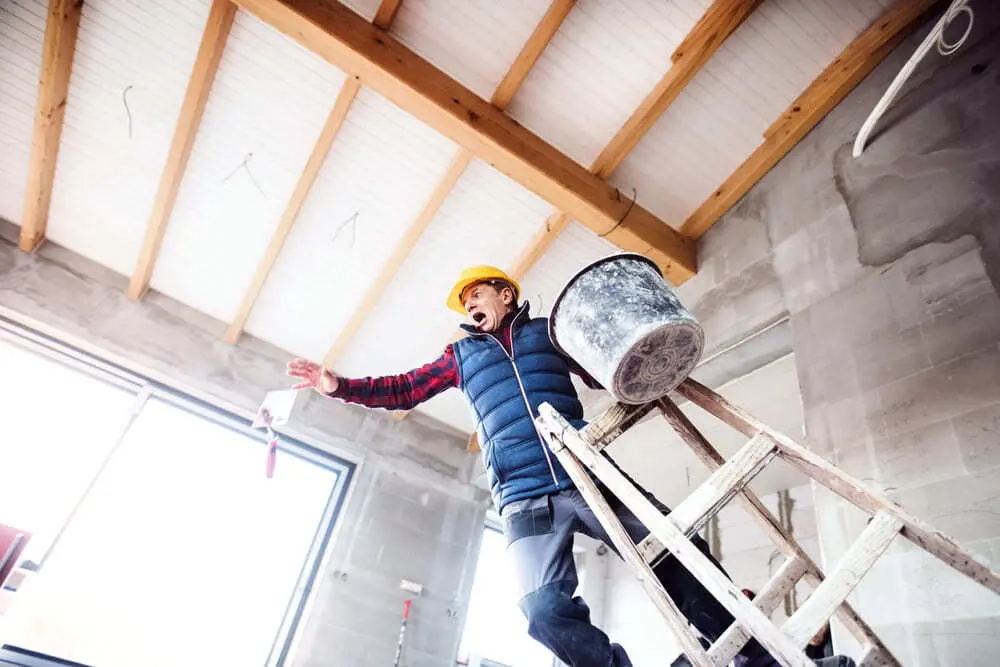
A ladder accident at a work site can leave you with painful injuries, and you may have questions about who may be legally responsible. Many injured workers first learn about their rights when they talk with a construction accident lawyer in NYC after a fall. In this guide, William Schwitzer & Associates, PC, explains New York labor law as it relates to ladder falls.
How Section 240 Treats a Ladder That Slips or Collapses
Yes, New York Labor Law §240(1) often applies when a ladder slips or collapses while you perform construction work. The law requires contractors, owners, and their agents to furnish ladders, scaffolding, hoists, and other devices that give workers proper protection. Section 240 also requires all scaffolding to bear four times the maximum weight it will carry.
A ladder that slips or collapses may support an inference that it failed to provide proper protection. Liability attaches only when a Section 240 violation was a proximate cause of the injury; the accident alone is not enough.
Who New York Labor Law Protects After a Ladder Fall
New York labor law bases coverage on the work you performed, not on your job title. The statute reaches workers who build, demolish, repair, alter, paint, clean, or point a building or structure.
According to the New York Committee for Occupational Safety and Health’s Deadly Skyline report, 77% of worksites where a worker died had OSHA violations identified during an inspection. Under Section 240, the duty to provide proper safety equipment on-site falls on property owners and contractors, along with their agents, and they cannot delegate that duty to a subcontractor. If a subcontractor supplied the faulty ladder, the owner and general contractor may still face liability to you.
Ways a Ladder Can Fail on the Job
According to the U.S. Bureau of Labor Statistics, ladders served as the primary source of 161 fatal work injuries in 2020. The American Ladder Institute also reports that these mishaps send more than 130,000 people to emergency rooms each year.
A slipping ladder often lacks a tie at the upper end or a coworker holding the base. A small shift in weight can also push the unsecured feet of a ladder outward in less than a second. A collapse usually points to the equipment itself, such as bent side rails or worn feet.
New York’s ladder safety requirements call for firm footing or proper securing, and a damaged ladder falls short of that standard. Other examples of ladder failure cases that may qualify under the statute include:
- A ladder breaks under the combined weight of your tools and materials.
- A ladder slides because it lacks rubber feet or sits on a slippery surface.
- A sound ladder tips over because no one secured it to the structure.
While Section 240 focuses on elevation-related hazards, the statute sets no minimum fall distance.
Why Short Falls Still Count as Elevation-Related Hazards
According to The American Journal of Surgery, hospitalized patients fell an average of approximately 10.9 feet. Falls from higher elevations may pose greater injury risk, but a tumble from a stepladder could still qualify under Section 240. Covered ladder or scaffold accidents can also include tools and materials that fall from above and strike you.
Despite the scope, the law does not cover every construction injury. A slip on a flat floor or routine maintenance work may fall outside Section 240. Discussing the case with your construction accident lawyer can clarify your options after a fall injury.
Common Defenses in a Section 240 Claim
The defendants in a ladder incident may argue that you climbed too fast, carried too much, ignored instructions, or failed to follow the site’s safety guidelines. If a violation of Section 240 contributed to your fall, your own carelessness generally will not reduce your recovery under that law. A claim can fail, however, if your conduct was the sole proximate cause of the accident and no Section 240 violation contributed to it.
Owners and contractors may also argue that you refused a safe device on purpose. If so, they typically must show that a proper safety device was readily available and that you ignored a specific instruction to use it without good reason.
Steps To Take Before You Speak With a Construction Attorney
Your health comes first, so seek medical care right away. Be sure to retain any doctor’s notes and bills, along with any documentation to show your symptoms and treatment.
If you can, photograph the ladder and its surroundings before anything changes at the construction site. Next, report the accident to your supervisor, preferably in writing. It is important to ask for a copy of the incident report.
If you are able to do so, write down the names and phone numbers of coworkers who saw your fall. As you receive treatment and continue to heal, keep your medical records and pay stubs to show how the injury has affected your health and income.
Contact a Construction Accident Lawyer in NYC at William Schwitzer & Associates, PC
New York labor law may give you a path to compensation beyond workers’ compensation when your ladder slips or collapses on a construction site. Our team at William Schwitzer & Associates, PC, can help you identify each responsible party, answer your questions about deadlines, gather evidence for your claim, and walk you through documenting a construction accident.
Call William Schwitzer & Associates, PC, at (212) 683-3800 for a free case evaluation. Our team can explain how New York labor law may apply to your ladder-related fall and help you decide on a suitable course of action. Our firm handles cases on a contingent fee basis, so you pay no attorney fee unless we recover money for you.
Frequently Asked Questions
These answers address common questions that injured workers ask after a ladder accident in New York.
How Long Do You Have To File a Section 240 Claim?
Claims against a city, town, or other public entity may require a notice of claim within 90 days. You generally have one year and 90 days from the date of your accident to file a Section 240 lawsuit in New York against a municipality. Claims against private defendants generally have a three-year deadline.
Can a Construction Accident Attorney in New York Help You Sue Your Employer Under Section 240?
Generally, you will not be able to sue your employer under Section 240 if they carry workers’ compensation insurance. You may, however, be able to bring a Section 240 claim against the property owner or general contractor, depending on the circumstances. A lawyer can assess whether other parties bear statutory responsibility.
Can You Collect Workers’ Compensation and Also File a Section 240 Claim?
If your situation warrants it, you may be able to collect workers’ compensation benefits and pursue a Section 240 claim at the same time. The Section 240 claim may cover losses that workers’ compensation does not, such as pain and suffering. A workers’ compensation lien may affect the amount you recover.
Does New York Labor Law Protect You After a Ladder Fall at a Private Home?
New York labor law may protect you after a ladder fall at a private home, but it exempts owners of one- and two-family homes who hire a contractor without directing or controlling the work. The homeowner exemption does not necessarily protect other contractors or statutory agents. However, workers’ compensation generally bars a direct Section 240 suit against your employer.