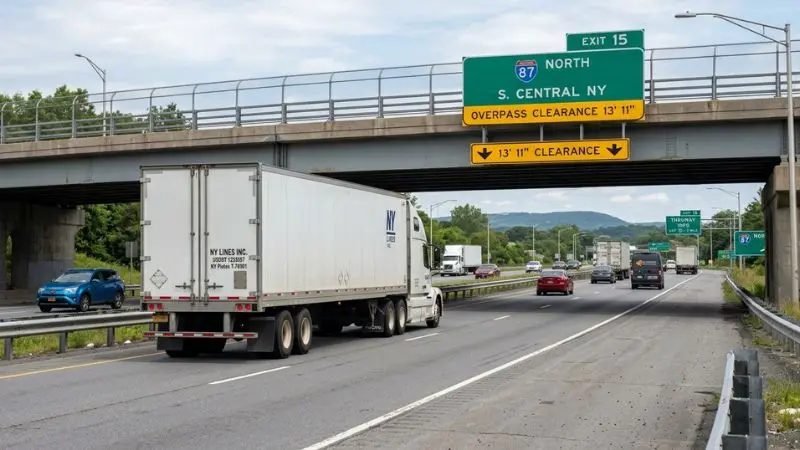
An I-87 bridge truck crash in Rockland County drew public attention after a tractor-trailer struck an overpass and overturned on the New York State Thruway, according to New York State Police.
Police reported that the August 10 incident happened on the southbound Thruway in South Nyack. According to State Police, a Mack tractor-trailer struck the South Broadway Bridge, overturned, and then struck a Toyota that was on the the shoulder. Authorities reported that the Toyota driver was taken to the hospital with injuries described as non-life-threatening. State Police also reported that the truck driver received a ticket related to an over-height vehicle.
The reported facts place focus on how collisions involving bridge clearance and commercial vehicles may be examined through public records, agency standards, and case-specific evidence.
Vehicle Height May Become a Central Question
In a crash involving contact with an overpass, vehicle height may become an important part of the factual review.
The New York State Thruway Authority states that the maximum vehicle height on the Thruway is 13 feet, 6 inches. The agency also notes that vehicles above that height may require consideration for a Special Hauling Permit.
In a commercial trucking incident, reported height issues may involve more than the tractor alone. Depending on the circumstances, public and private review may involve the trailer, cargo setup, container placement, and the vehicle’s total height as configured at the time of travel.
The Thruway Authority has also published enforcement information identifying over-height violations among commercial-vehicle offenses on the Thruway. A reported ticket may be relevant to the incident record, but it does not by itself determine every issue that could arise in a separate civil matter.
Bridge Strikes May Involve Multiple Sources of Evidence
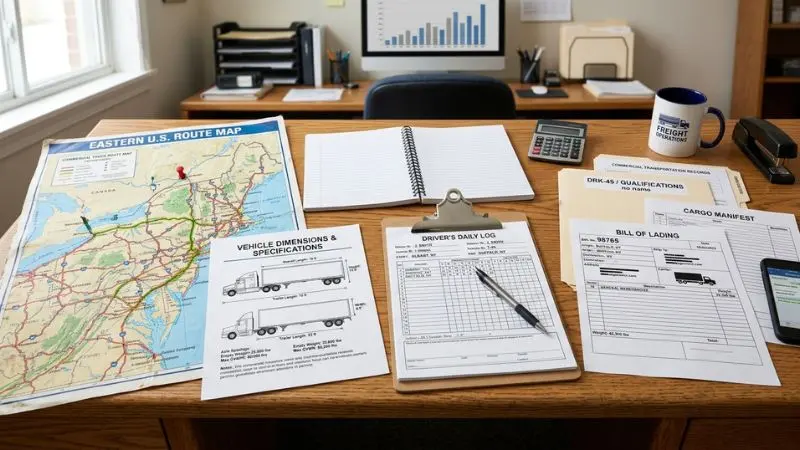
A bridge strike may lead to review of several different factual issues.
Depending on the circumstances, those issues may include the vehicle’s actual height, the posted bridge clearance, roadway signage, routing decisions, cargo configuration, and the sequence of events surrounding the incident.
The Federal Motor Carrier Safety Administration has identified bridge strikes as a significant concern because of the potential for injuries, infrastructure damage, and traffic disruption. The agency has also discussed the role of route restrictions and commercial navigation systems in connection with over-height vehicles.
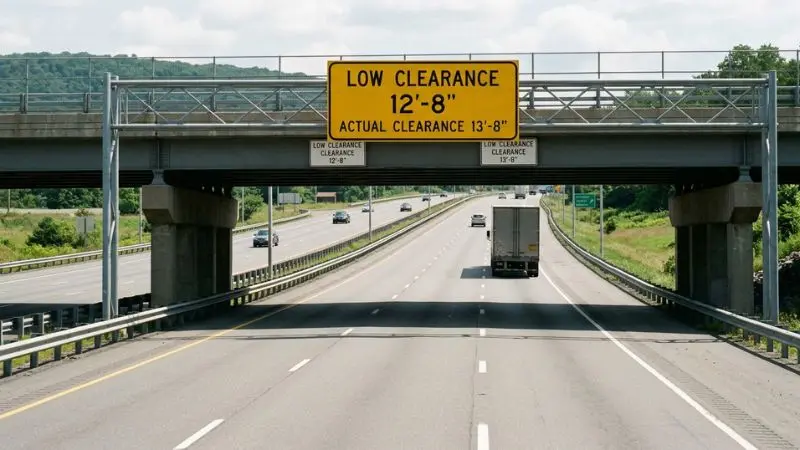
New York transportation officials have also addressed low-clearance risks. NYSDOT guidance concerning low-clearance structures discusses bridge-clearance signs and other countermeasures intended to identify structures with limited overhead clearance.
Commercial Truck Crash Review May Extend Beyond the Driver
The I-87 bridge truck crash also reflects how a commercial vehicle incident may involve records beyond a basic collision report.
Federal regulations provide that commercial motor vehicles must be operated in accordance with applicable state and local laws. 49 CFR § 392.2 sets out that general operating requirement.
In a civil case arising from a commercial truck collision, the available evidence may include information connected to the driver, the motor carrier, the vehicle, the route, and the trip involved. Which records become relevant depends on the facts under review.
The available reporting in this matter does not establish every issue of responsibility, and no broader conclusion should be drawn beyond the facts reported by authorities. The fact that the Toyota was reportedly on the shoulder may become part of the factual record, but it does not resolve the legal outcome of any claim by itself.
Reported Injuries and Civil Review
According to State Police, the Toyota driver suffered injuries described as non-life-threatening. Public injury descriptions released shortly after a crash may be limited, and they do not necessarily reflect the full scope of a person’s medical condition or the full record that may later develop.
In matters involving an overturned tractor-trailer and a passenger vehicle, the evidentiary record may include medical documentation, treatment history, employment-related losses, and other materials relevant to the claimed impact of the collision. What significance those materials carry depends on the facts and circumstances of the individual case.
For the person reportedly injured in this I-87 bridge truck crash, the currently available public information appears limited to the basic circumstances reported by law enforcement and the citation issued in connection with the incident.
Why the Incident Drew Attention
Collisions involving commercial trucks and bridge structures often receive attention because they may involve transportation rules, infrastructure concerns, and questions about how the vehicle was configured or routed at the time of the event.
According to New York State Police, this South Nyack crash involved an alleged over-height vehicle, an overturned tractor-trailer, and injuries to the driver of another vehicle. That combination of factors makes the incident notable without establishing conclusions beyond the official report.
William Schwitzer & Associates represents people injured in motor vehicle and commercial truck collisions in New York. In matters involving trucking incidents, the firm advocates for clients as the relevant records, reported facts, and legal issues are reviewed through the appropriate process.
Important Legal Disclaimer
This information is only a general guide and is NOT LEGAL ADVICE. Each case is different. The best option is to call our offices for specialized help, call (212) 683-3800 and contact William Schwitzer & Associates for legal assistance.
The images shown in this blog are for illustrative purposes only.