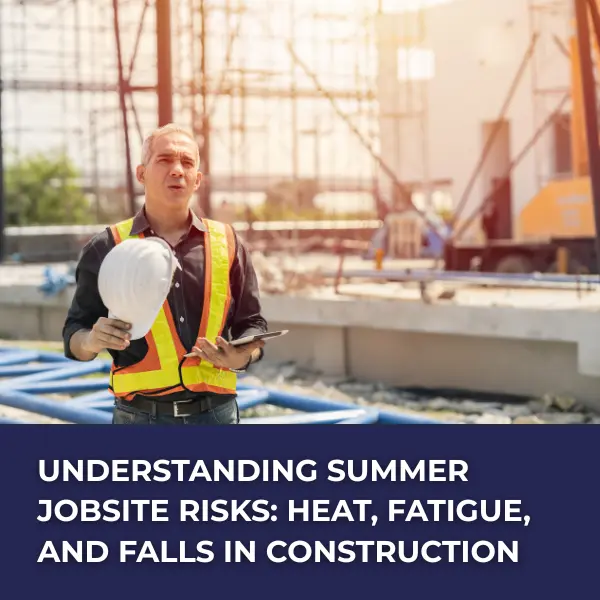
Imagine this: You’re framing steel at a high-rise jobsite in June. The sun is brutal, the work is repetitive, and you’re three hours past your first break. You feel dizzy, but the schedule doesn’t stop. This kind of moment is more common than most people realize, and it can be dangerous.
Heat, Fatigue, and Falls in Construction are more than seasonal concerns. They are recurring summer jobsite trends backed by national data. According to the Bureau of Labor Statistics (BLS), the construction industry consistently records high rates of workplace injuries and fatalities, especially during the hotter months. Falls, heat-related illnesses, and fatigue-related mistakes remain among the leading causes.
Why Summer Jobsite Injuries Spike
The months of June, July, and August bring longer daylight hours, increased workloads, and higher temperatures. These factors converge to create risky conditions on construction sites across the country. OSHA’s Heat Illness Prevention Campaign emphasizes that outdoor workers are at higher risk for heatstroke and related health problems during this period.
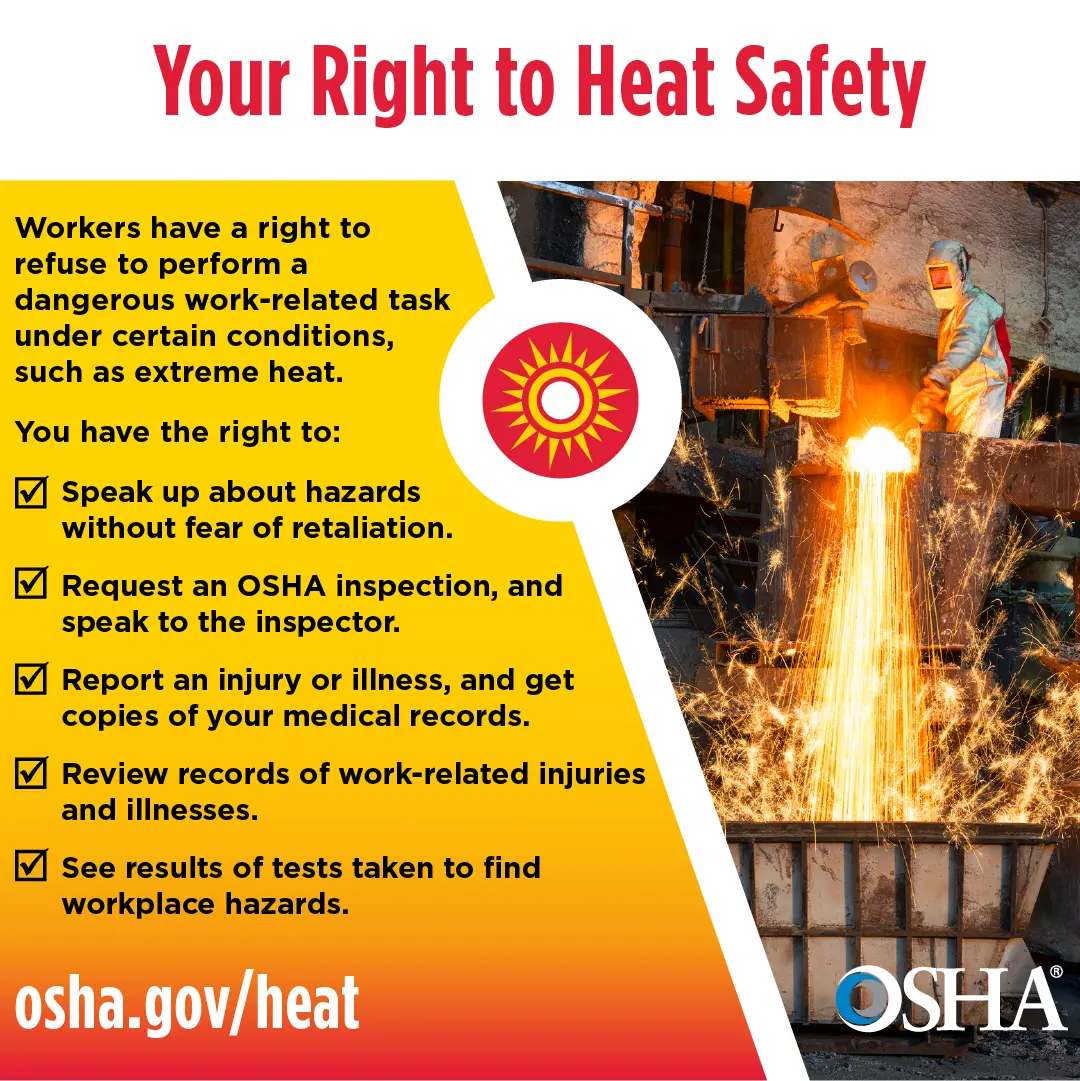
But the risks go beyond just heat. As the CDC’s NIOSH data highlights, summer fatigue also impacts workers’ ability to perform tasks safely, leading to potential missteps and accidents. NIOSH further states that longer work hours and limited recovery time can result in cognitive lapses, small errors that can have big consequences on a jobsite.
Do you want to learn more about this topic? Read more about our blog 421 Dead in 2023: Why the National Safety Stand-Down (May 6–10, 2025) Matters Now More Than Ever.
Heat, Fatigue, and Falls in Construction Are Connected
It’s not just the temperature. It’s also about pace and pressure. According to the CDC’s Heat Stress Guide, when the body is unable to cool itself properly, workers become more prone to dizziness, delayed reaction time, and falls.
Falls in construction accounted for 38.4% of fatalities in the sector in 2022, according to the BLS. Nearly half of all fall-related deaths occurred in this industry alone. And while many fall-prevention efforts target scaffolding or ladder safety, underlying factors like heat exhaustion and sleep deprivation often go overlooked.
What This Means for Workers and Legal Advocacy
Understanding these seasonal risks doesn’t mean offering health advice; it means paying attention to patterns that repeatedly impact workers’ safety. For construction workers in New York City, that’s a matter of life and death. WSAT Law doesn’t provide medical guidance, but we do advocate for those who suffer when jobsite conditions aren’t managed properly.
When workplace injuries occur due to unsafe jobsite conditions, legal advocacy may become necessary.. We focus on supporting injured workers through the legal process and ensuring they receive fair representation and the compensation they deserve.
Important:
This information is only a general guide and is NOT LEGAL ADVICE. Each case is different. Images used are conceptual illustrations and do not depict actual events or clients. The best option is to call our offices for specialized help. Call (212) 683-3800 to contact William Schwitzer & Associates for legal assistance.