New York City’s construction industry continues to evolve alongside the city’s expanding skyline. Publicly available data from city and federal agencies indicates that construction-related injuries and fatalities remain a persistent concern across the five boroughs. Reports released in recent years provide insight into the types of incidents occurring on job sites and the broader conditions facing the industry.
Construction Accident Trends 2026: Overview of Recent Data
According to the 2025 Deadly Skyline report published by the New York Committee for Occupational Safety and Health (NYCOSH), statewide construction fatalities reached 74 workers in 2023, the highest reported total in more than a decade. Public summaries of the the report indicate that a significant portion of those fatalities occurred within New York City.
Data published by the New York City Department of Buildings (DOB) shows hundreds of construction-related incidents reported in 2024, resulting in numerous injuries and several fatalities. Manhattan and Brooklyn accounted for a large share of these reports, often associated with large-scale developments and infrastructure projects.
When viewed together, these reports illustrate how construction accident trends in 2026 continue to reflect the challenges of a high-density construction environment, including project volume, workforce pressures, and aging structures.
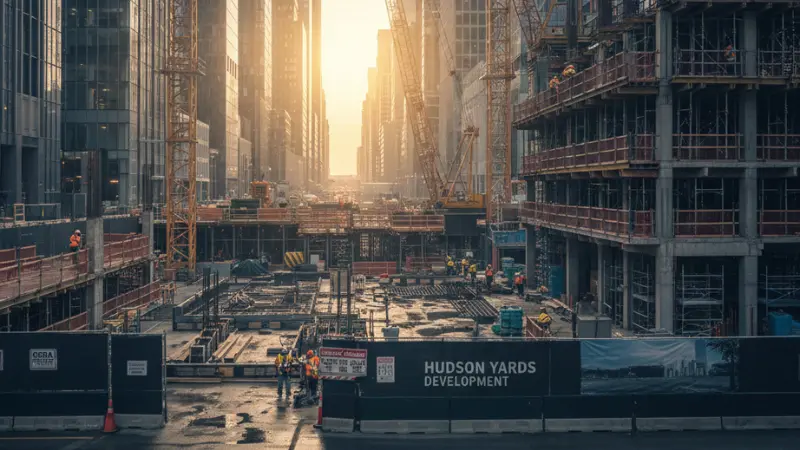
Commonly Reported Construction Accident Categories
Federal and local agencies routinely categorize construction incidents based on recurring hazards identified across job sites. Public safety materials frequently reference the following incident types:
-
Falls from Heights: National labor statistics from the U.S. Bureau of Labor Statistics consistently identify falls as a leading category of construction-related fatalities.
Access the PDF with the data here. -
Struck-By Incidents: OSHA training and safety publications note that injuries may occur when workers are struck by falling materials, tools, or construction vehicles.
Access the PDF with the data here. -
Caught-In or Between Incidents: OSHA’s widely cited “Fatal Four” hazard classifications include incidents involving workers caught between machinery, materials, or collapsing structures.
Access the PDF with the data here.
These categories are commonly referenced in discussions of construction accident trends in 2026 and are used by agencies to describe patterns observed in reported incidents.
Regulatory Activity and Safety Programs
In recent years, the New York City Department of Buildings has reported expanded enforcement activity related to construction safety, including inspections and penalties tied to building code violations. At the federal level, the Occupational Safety and Health Administration continues to publish guidance and conduct enforcement activity related to recognized construction hazards.
Public commentary from industry observers has noted that enforcement resources and oversight levels can vary depending on project size and location. These observations are drawn from publicly available reports and do not reflect findings in any specific incident.
Legal Advocacy for Injured Construction Workers
William Schwitzer & Associates represents construction workers who have been injured on the job, as well as families affected by fatal construction accidents. The firm’s work focuses on evaluating claims, reviewing available records, and pursuing legal remedies permitted under New York law.
The firm does not provide safety training, regulatory guidance, or enforcement services. Its role is limited to legal advocacy on behalf of individuals who have already been injured.
About This Information
Discussions of construction accident trends 2026 are based on publicly released reports and aggregated data. Individual incidents vary based on their specific facts and circumstances, and publicly reported statistics are subject to revision.