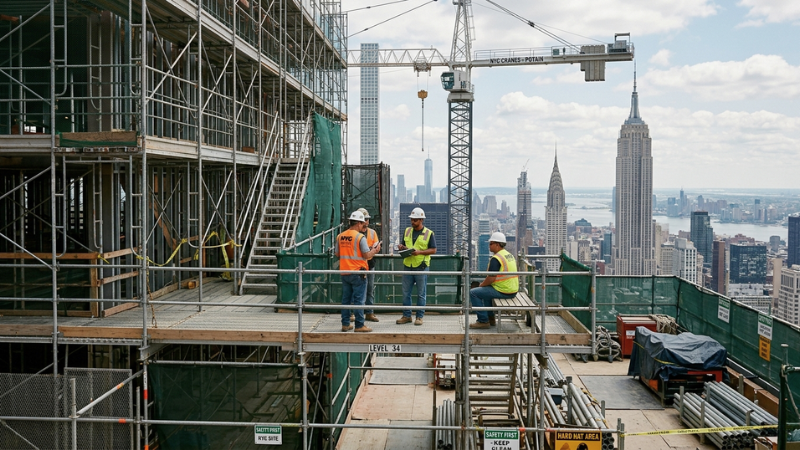
Every May, construction safety takes center stage across the country.
Building Safety Month 2026 begins with a renewed focus on how construction sites, building codes, and safety systems are viewed in the public eye. The campaign, led by the International Code Council, highlights how construction standards and safety practices connect to everyday life in cities like New York.
While the campaign is widely known for education and outreach, it also reflects something deeper. Construction safety often receives increased national attention following widely reported incidents, particularly in dense urban areas where building activity is ongoing.
Why Construction Safety Gets a National Spotlight
The phrase Building Safety Month 2026 Begins is more than a calendar event. It reflects how safety in construction is tied to public awareness, legal review, and ongoing oversight.
Across the United States, construction remains one of the the most closely monitored industries. According to the Occupational Safety and Health Administration, construction consistently accounts for a significant share of workplace injuries each year.
https://www.osha.gov/data/commonstats
In New York City, that attention is even more visible. Agencies like the New York City Department of Buildings track construction activity, enforce safety rules, and investigate site conditions following reported incidents.
https://www.nyc.gov/site/buildings/safety/safety.page
When Building Safety Month 2026 begins, it brings national attention to systems that are already active year-round.

How Safety Standards Are Reviewed After Incidents
Construction safety is not only about prevention. It is also about how incidents are examined after they occur.
When a workplace accident or structural issue is reported, multiple layers of review often take place. These may involve federal agencies, city departments, and independent evaluations. The National Institute for Occupational Safety and Health conducts research and analysis into workplace hazards, including construction-related risks.
https://www.cdc.gov/niosh/construction/about/index.html
Investigations typically focus on:
- Site conditions at the time of the incident
- Compliance with building codes and safety rules
- Equipment use and maintenance
- Oversight responsibilities across contractors and site managers
These reviews help determine how safety systems functioned in real conditions. They also shape how future construction activity is monitored.
The Role of Building Codes in Everyday Construction
At the center of Building Safety Month 2026 begins is a broader conversation about building codes.
Building codes are not abstract rules. They guide how structures are designed, built, and maintained. Organizations like the Federal Emergency Management Agency emphasize that modern building codes play a key role in reducing damage during disasters and protecting occupants.
https://www.fema.gov/emergency-managers/risk-management/building-science/building-codes
In New York, these codes influence everything from scaffolding requirements to structural design. When incidents occur, these same codes are often reviewed to understand whether standards were followed or if conditions on-site created additional risks.
Building Safety Month highlights this connection between written standards and real-world construction environments.
Why Public Awareness Matters in Construction Safety
When Building Safety Month 2026 begins, it brings construction safety into public conversation.
Campaigns like this often include community events, educational materials, and outreach efforts. But they also reflect how construction safety affects more than just workers. In cities with ongoing development, site conditions can impact pedestrians, nearby buildings, and surrounding neighborhoods.
Public awareness plays a role in how safety concerns are reported, how agencies respond, and how construction activity is viewed at a broader level.
In that sense, the national spotlight is not only about recognition. It is about visibility into systems that operate every day.
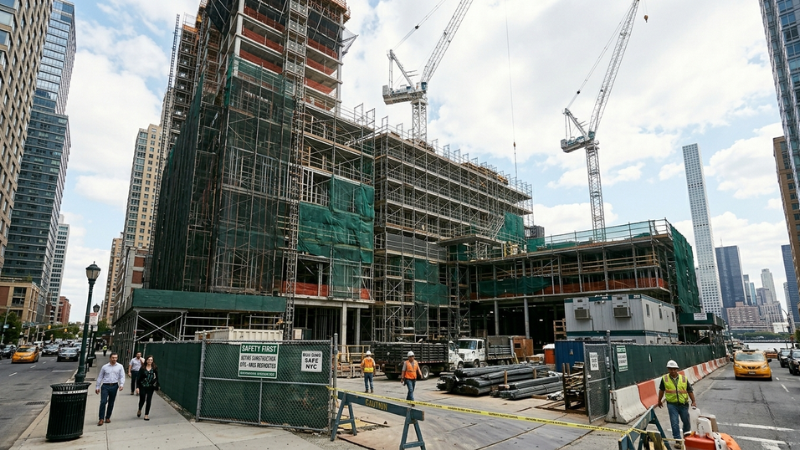
A Broader Look at Construction Risk and Accountability
Construction work involves complex coordination between multiple parties. Contractors, property owners, site managers, and regulatory agencies all play roles in maintaining safety standards.
When Building Safety Month 2026 begins, it reflects how these responsibilities are viewed through a wider lens. Incidents that occur on construction sites are often examined not only for what happened, but for how oversight systems functioned.
This includes reviewing:
- Compliance with safety regulations
- Communication between involved parties
- Site supervision and enforcement practices
These elements are part of how construction safety is understood in both legal and public contexts.
Conclusion
Building Safety Month 2026 Begins as a national reminder that construction safety is an ongoing issue, not limited to one time of year. The spotlight placed on safety reflects how closely construction activity is connected to public risk, legal review, and accountability systems.
At William Schwitzer & Associates, P.C., these cases are part of a broader effort to understand how construction incidents are examined and how individuals impacted by them are represented within that process.
Important:
This information is only a general guide and is NOT LEGAL ADVICE. Each case is different. The best option is to call our offices for specialized help, call (212) 683-3800, and contact William Schwitzer & Associates for legal assistance.
The images shown in this blog are for illustrative purposes only.