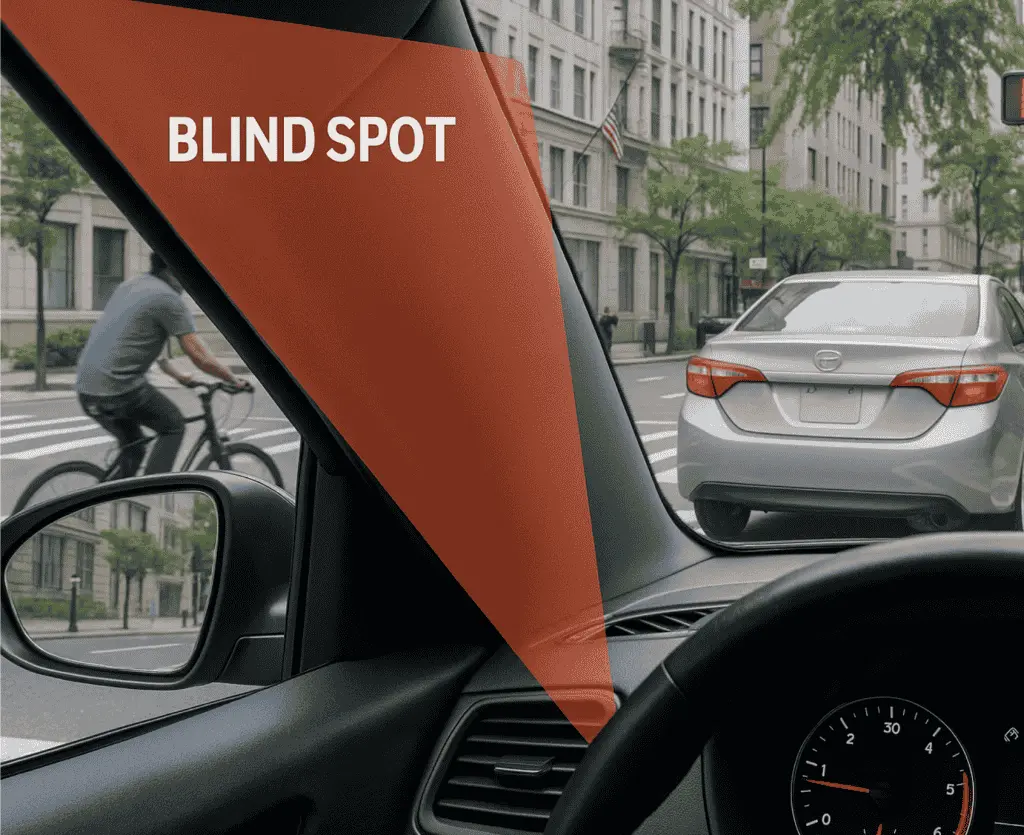
Vehicle blind spot design has become an increasing focus of safety research as modern vehicle sizes and front-end profiles continue to change. Recent studies examining forward visibility suggest that some popular vehicle models now have larger forward blind zones than earlier generations, raising broader public-interest questions about roadway safety and injury risk.
Rather than focusing on individual driving behavior, this research highlights how vehicle design trends may affect visibility for drivers, pedestrians, and cyclists.
Could Your Car’s Blind Spots Be Putting Lives at Risk?
A recent study by the Insurance Institute for Highway Safety (IIHS) reveals an alarming finding: Top vehicles have a design flaw that silently puts drivers, pedestrians, and cyclists at risk. The forward blind zones in six of the most popular vehicle models have grown drastically over the past 25 years, just as pedestrian and bicycle fatalities have surged across the U.S.
Using a new measurement technique, the IIHS and researchers from the U.S. Department of Transportation’s Volpe Center found that top vehicles have a design flaw linked to dangerously reduced driver visibility. The study covered vehicles like the the Chevrolet Suburban, Ford F-150, Honda Accord, Honda CR-V, Jeep Grand Cherokee, and Toyota Camry from model years 1997 to 2023.
Top Vehicles Have a Design Flaw That Impacts Visibility
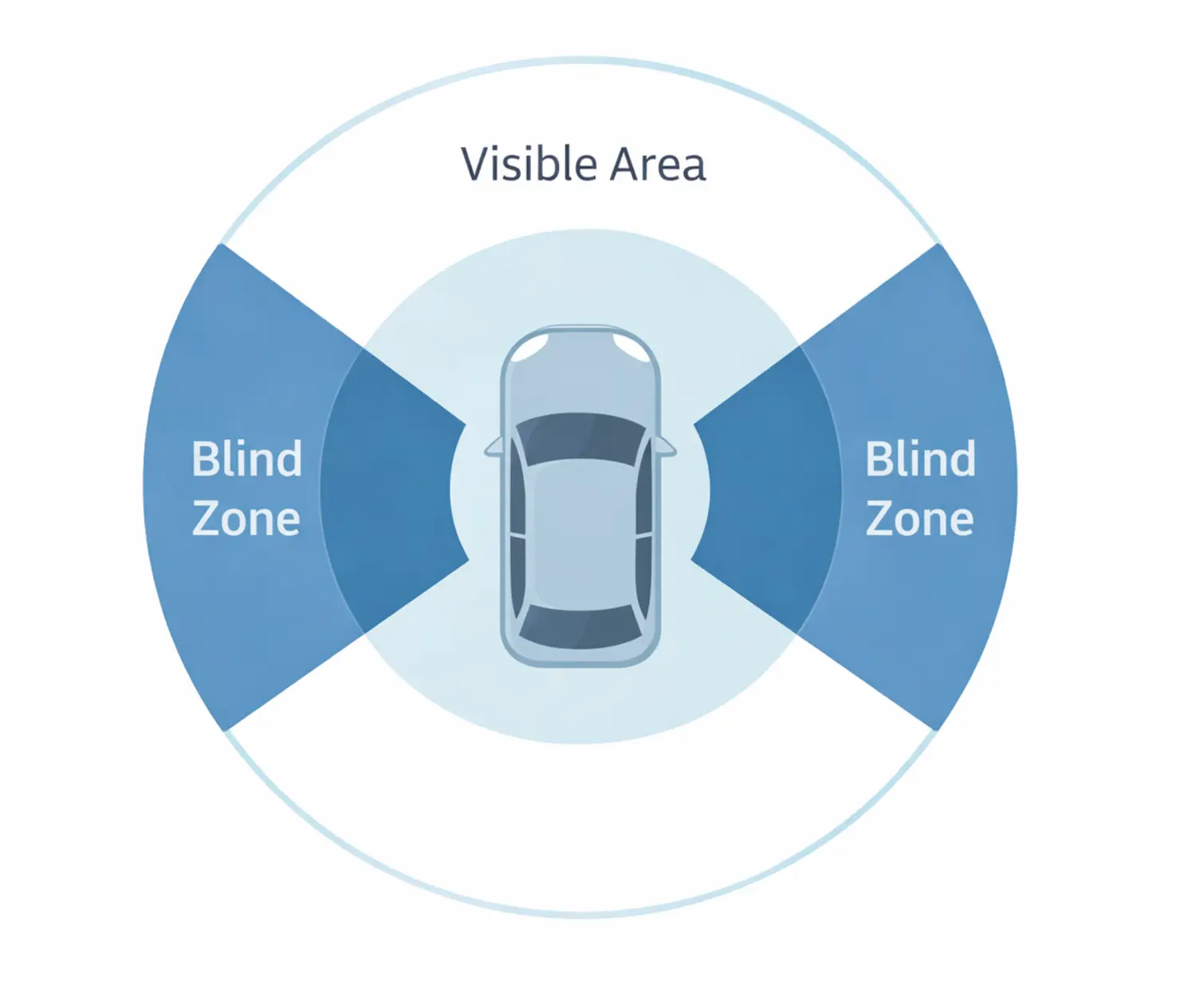
The forward visibility of these vehicles, defined as the area within a 10-meter radius in front of the car, dropped significantly in many cases. For example:
- The Honda CR-V’s visible area decreased from 68% in 1997 to just 28% in 2022.
- The Chevy Suburban’s visibility dropped from 56% in 2000 to 28% in 2023.
- The Ford F-150 started with a limited 43% visibility in 1997, which dropped further to 36% by 2015.
This decline in visibility wasn’t limited to SUVs and trucks. Even passenger cars like the Accord and Camry saw visibility reductions of up to 8%.
Declining Visibility Trends in Modern Vehicles
The findings indicate that vehicle blind spot design has shifted over time, with several models showing a reduction in forward visible area compared to earlier versions. Larger vehicle footprints, higher hood lines, and changes in structural design were identified as contributing factors.
These trends were observed not only in SUVs and pickup trucks, but also in some passenger vehicles, though to a lesser extent.
Why Vehicle Blind Spot Design Matters in Urban Settings
Reduced forward visibility is of particular concern in dense urban environments, where drivers frequently share the roadway with pedestrians and cyclists at close range. National crash data shows that pedestrian and cyclist injuries have increased in recent decades, prompting ongoing evaluation of how infrastructure, vehicle design, and traffic patterns intersect.
The National Highway Traffic Safety Administration (NHTSA) tracks pedestrian and cyclist injury trends as part of its broader roadway safety analysis.
Source – NHTSA Pedestrian Safety Data:
https://www.nhtsa.gov/road-safety/pedestrian-safety
While no single factor explains these trends, vehicle design has become part of the broader public conversation around traffic safety and injury prevention.
Do you want to learn more about car accidents and cyclist accidents in NYC? Read more about our blog “E-Bike Crashes in NYC: Why Serious Injuries Keep Rising in Manhattan Streets.”
A New Method Brings Hidden Danger to Light
The new IIHS method uses portable camera rigs and software to create 360-degree maps of a driver’s field of view. It replaces older, less efficient techniques involving laser scans or manual measurements with cones. This breakthrough enables faster, widespread visibility research.
Legal Context and Product-Related Injury Review
When injuries occur, vehicle blind spot design may become one of many factors reviewed during civil legal proceedings. These reviews do not assume fault and do not determine conclusions in advance. Instead, they examine whether design characteristics, roadway conditions, and operational factors contributed to the incident under applicable law.
Such legal analysis is separate from regulatory research and focuses on accountability when harm occurs.
Advocacy for Individuals Injured in Traffic Incidents
At William Schwitzer & Associates, our role is to advocate for individuals and families who suffer physical injuries in traffic-related incidents involving vehicles, pedestrians, or cyclists. We do not design vehicles, conduct safety research, or provide driving instruction. Our work focuses on representing injured individuals within the legal system when serious injuries occur.
Understanding how vehicle design research informs public-interest discussions helps place traffic injuries in a broader legal and societal context.
If you or a loved one was injured in a pedestrian or cyclist accident, call us today at (212) 683-3800. Let WSAT Law help you understand your legal options.
Important:
This information is only a general guide and is NOT LEGAL ADVICE. Each case is different. Images used are conceptual illustrations and do not depict actual events or clients. The best option is to call our offices for specialized help. Call (212) 683-3800 to contact William Schwitzer & Associates for legal assistance.