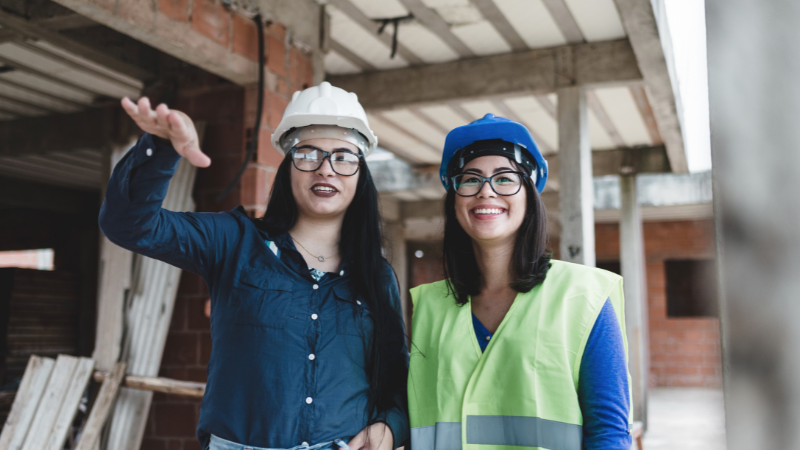
Women in Construction Week 2026 Highlights the Growing Role of Women Across U.S. Job Sites
Imagine a modern construction site: cranes overhead, crews coordinating complex projects, and skilled workers shaping the infrastructure of cities. Increasingly, women are part of that workforce. Women in Construction Week 2026 highlights the growing role of women across construction projects throughout the United States.
Held from March 1–7, 2026, Women in Construction Week 2026 is organized by the National Association of Women in Construction. The annual event coincides with Women’s History Month and recognizes the contributions of women working across the construction industry.
The 2026 theme, “Level Up. Build Strong.”, reflects the continued expansion of opportunities for women in construction careers and the broader visibility of women working on job sites, in engineering roles, and in project leadership.
More details about the national campaign and events can be found through NAWIC.
https://www.nawic.org
Women in Construction and Industry Growth
Women in Construction Week arrives at a time when participation by women in the construction workforce has reached its highest level to date.
According to the U.S. Bureau of Labor Statistics, women now make up roughly 15% of the construction workforce, representing a record share of the industry.
https://www.bls.gov
Construction careers include a wide range of roles such as:
-
Skilled trades
-
Project management
-
Engineering and architecture
-
Safety coordination
-
Equipment operation
The growing presence of women in these roles reflects long-term workforce changes occurring across the construction industry.
Industry organizations frequently highlight career pathways and mentorship programs during Women in Construction Week, helping spotlight professionals who contribute to major building and infrastructure projects across the country.
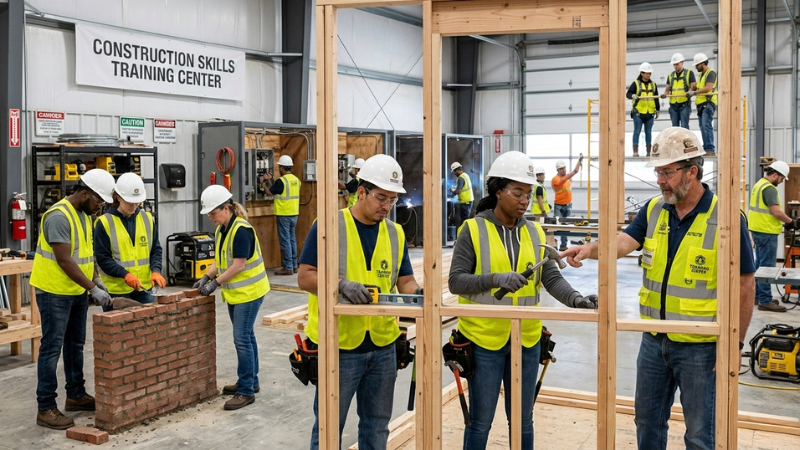
Industry Recognition During Women in Construction Week
Events during Women in Construction Week often include conferences, networking opportunities, job-site tours, and educational panels organized by local industry chapters.
Many of these programs focus on workforce development and career awareness for students and young professionals interested in construction careers.
The week also provides an opportunity for labor organizations and industry groups to publicly recognize the people performing hands-on construction work every day.
For example, the Laborers’ International Union of North America(LIUNA) shared a social media message celebrating women working in the trades during Women in Construction Week.

In the post, the organization highlighted the daily work performed by women across construction sites, emphasizing the hands-on nature of the industry with a message celebrating workers who help lift materials, pour concrete, and build infrastructure projects.
Messages like this reflect how unions and industry organizations are using Women in Construction Week to recognize the people performing essential construction work across the country.
Apprenticeships and Construction Career Pathways
Another major focus of Women in Construction Week involves workforce training and apprenticeship opportunities.
According to the U.S. Department of Labor, apprenticeship programs provide structured training pathways into many construction trades, including electrical work, carpentry, and heavy equipment operation.
https://www.apprenticeship.gov
These programs combine classroom education with paid on-the-job training and are widely used across the construction sector.
Workforce development initiatives connected to Women in Construction Week frequently highlight apprenticeship opportunities as one of the primary ways new workers enter the industry.
Across the United States, infrastructure development and large-scale building projects continue to create demand for skilled labor across construction trades.
Construction Work and Job-Site Safety
While Women in Construction Week recognizes workforce achievements, it also connects with ongoing discussions about job-site safety.
Construction remains one of the most hazardous industries in the United States. According to the Occupational Safety and Health Administration, construction fatalities often involve four leading types of incidents known as the “Fatal Four.”
These include:
-
Caídas de altura
-
Struck-by incidents involving equipment or materials
-
Electrocución
-
Caught-in or caught-between accidents
Together, these hazards account for the majority of construction-related fatalities nationwide.
https://www.osha.gov
Safety regulations, training programs, and workplace oversight are frequently discussed in relation to construction work across the United States.
The Public Conversation Around Women in Construction Week
Women in Construction Week has been observed since 1960, when NAWIC first established the event to recognize women working in the building industry.
Since then, the construction workforce has evolved significantly. Today, women contribute to projects ranging from residential development to major transportation infrastructure.
In large construction markets such as New York City, where cranes and building projects remain a constant part of the skyline, the conversation around workforce representation and safety continues to grow.
Events connected to Women in Construction Week highlight the people who contribute to the physical development of cities, roads, bridges, and buildings across the country.
At William Schwitzer & Associates, our work focuses on standing with individuals and families affected by serious construction accidents and workplace injuries.
Construction workers contribute to the development of the environments where people live and work, and job-site safety continues to be widely discussed in public and industry conversations.
Important:
This information is only a general guide and is NOT LEGAL ADVICE. Each case is different. The best option is to call our offices for specialized help, call (212) 683-3800 and contact William Schwitzer & Associates for legal assistance.
The images shown in this blog are for illustrative purposes only.