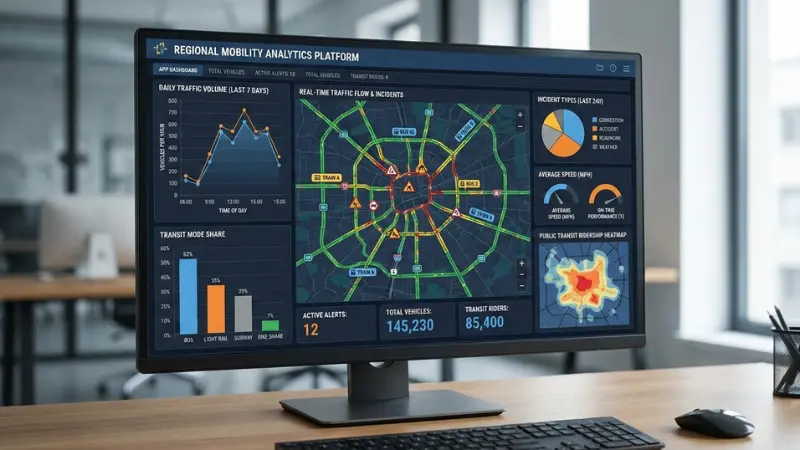
The U.S. DOT Safety Data Initiative reflects a growing shift in how roadway safety is studied across the country.
Led by the U.S. Department of Transportation, the Safety Data Initiative (SDI) focuses on using technology, crash data, and predictive tools to better understand serious roadway incidents. Rather than reacting only after collisions occur, the initiative explores how data can help identify patterns and high-risk conditions before tragedies happen.
While every crash is unique, federal transportation agencies increasingly rely on large-scale datasets to analyze national safety trends.
What Is the U.S. DOT Safety Data Initiative?
The U.S. DOT Safety Data Initiative is part of a broader federal effort to modernize traffic safety analysis. Through pilot programs and research collaborations, SDI examines how integrated data systems can improve understanding of:
• Severe crashes
• Pedestrian fatalities
• Rural roadway risks
• Real-time crash prediction
• Traffic speed patterns
Much of this work supports the the mission of agencies such as the National Highway Traffic Safety Administration, which maintains nationwide crash databases.
One of the most significant data systems referenced in SDI projects is the Fatality Analysis Reporting System (FARS). FARS is a nationwide census of fatal motor vehicle crashes, maintained by NHTSA. According to NHTSA, FARS collects detailed information about every fatal traffic crash in the United States, creating one of the most comprehensive public safety datasets available (.gov source).

Real-Time Crash Risk Tools
Several pilot projects under the U.S. DOT Safety Data Initiative focus on predictive analytics.
For example, researchers have developed visualization tools that combine real-time and historical crash data to assess risk levels on highways. These tools analyze traffic flow, roadway characteristics, and crash history to identify segments where severe crashes may be more likely.
The DOT’s Volpe National Transportation Systems Center has also explored combining crowdsourced crash reports with official police-reported crash data to improve near-real-time crash estimation.
These types of systems represent a shift in how transportation agencies think about prevention. Instead of relying only on past statistics, predictive modeling attempts to forecast where risks may increase.
The Pedestrian Fatalities Pilot
One of the most widely discussed SDI projects examined pedestrian fatality risk.
The Pedestrian Fatalities Pilot analyzed data from federal agencies including the Federal Highway Administration, NHTSA, the Environmental Protection Agency, and the U.S. Census Bureau. The research explored how roadway type and built environment characteristics influence pedestrian fatality rates.
According to findings published in Accident Analysis & Prevention, urban arterial roads without access control were associated with higher pedestrian fatality risk. Employment density in retail areas was also linked to increased pedestrian fatality risk in both urban and rural communities.
This type of research highlights how infrastructure design and land use patterns can affect safety outcomes.
Rural Speed and High-Risk Roadways
Another pilot project studied rural speed patterns and crash occurrence. Rural highways account for a disproportionate share of fatal crashes nationally, even though they carry less traffic than urban roads.
By incorporating operational speed data into predictive models, researchers aim to better understand how speed interacts with roadway characteristics. These models attempt to identify segments with elevated crash risk.
The broader goal of the U.S. DOT Safety Data Initiative is not enforcement. It is data transparency and improved analysis.

Why Federal Safety Data Matters in New York
Although the Safety Data Initiative is a federal program, its research affects states like New York.
Crash trends tracked through FARS and other NHTSA systems inform roadway funding decisions, infrastructure upgrades, and safety grant programs. Local agencies often rely on federal datasets when evaluating traffic patterns and crash frequency.
In New York City, pedestrian safety remains a major public concern. National research about arterial road design and employment density can influence long-term transportation planning discussions.
For families affected by serious crashes, these datasets also play a role in understanding broader risk patterns. While each collision involves specific facts, federal data systems provide context about roadway conditions and historical crash frequency.
Data, Accountability, and Public Safety
The U.S. DOT Safety Data Initiative reflects a larger shift toward transparency and measurable safety outcomes. By integrating artificial intelligence, real-time traffic monitoring, and multi-agency datasets, transportation officials are working to better understand why severe crashes occur.
For individuals and families impacted by catastrophic collisions, crash data is often one part of a much larger legal review process. Civil claims focus on specific circumstances, but public safety data helps shape the environment in which those cases arise.
At William Schwitzer & Associates, our work centers on representing injured individuals and families affected by serious motor vehicle collisions throughout New York. Federal crash data initiatives like SDI show how roadway safety continues to evolve nationwide.
Important:
This information is only a general guide and is NOT LEGAL ADVICE. Each case is different. The best option is to call our offices for specialized help, call (212) 683-3800, and contact William Schwitzer & Associates for legal assistance.
The images shown in this blog are for illustrative purposes only.