Según el Departamento de Transporte de Nueva York, cada año se producen más de 10 000 lesiones a peatones en accidentes de tráfico en toda la ciudad de Nueva York. Los pasos de peatones están diseñados para garantizar la seguridad de las personas, pero a pesar de ello se producen accidentes a diario. Conocer estos datos sobre los accidentes de peatones en los pasos de peatones de Nueva York puede ayudar a sensibilizar a la población y a promover unas calles más seguras para todos.
1. Los accidentes en los pasos de peatones de Nueva York son más frecuentes de lo que crees
En los cruces con mucho tráfico, las señales de los pasos de peatones suelen dar a los peatones una falsa sensación de seguridad. Muchos de los accidentes de peatones en los pasos de peatones de Nueva York se producen cuando los conductores giran sin ceder el paso. Incluso en las zonas señalizadas, la conducción distraída y el exceso de velocidad siguen siendo las principales causas de lesiones.
¿Quieres saber más sobre cómo WSAT Law ayuda a los peatones que han sufrido lesiones? Lee más en nuestro blog«Cómo William Schwitzer and Associates defiende los principios éticos en casos complejos de lesiones».
2. Las condiciones meteorológicas afectan a la visibilidad
La lluvia, la nieve y la niebla pueden dificultar la visibilidad de los pasos de peatones. El Departamento de Transporte de Nueva York insta tanto a los conductores como a los peatones a que extremen la precaución en condiciones de baja visibilidad. De hecho, muchos de los accidentes que se producen en los pasos de peatones de Nueva York tienen lugar al atardecer o al amanecer, cuando la iluminación es escasa y el tráfico es intenso.

3. La distracción influye en todo el mundo
No se trata solo de los conductores distraídos; los peatones que utilizan el móvil o llevan auriculares también corren peligro. Prestar toda la atención al cruzar la calle puede ayudar a reducir la probabilidad de que se produzcan accidentes de peatones en los pasos de cebra de Nueva York. La concienciación por ambas partes es fundamental.

4. Últimas noticias: Las señales peatonales accesibles mejoran la seguridad en los pasos de peatones de Nueva York
La ciudad de Nueva York sigue mejorando la seguridad de los peatones a través de su programa de semáforos accesibles para peatones (APS). Según el Departamento de Transporte de Nueva York, estos dispositivos ayudan a los peatones ciegos o con baja visión a cruzar la calle de forma segura.
Los dispositivos APS están instalados en las esquinas de las aceras, cerca de los pasos de peatones, y emiten un tono de localización de baja intensidad para guiar a los peatones hasta el botón. Cada botón cuenta con una flecha en relieve que señala la dirección del paso de peatones. Al pulsarlo, el dispositivo anuncia «espere», seguido de un pitido audible lento. Una vez que se activa la señal de «Walk», el botón vibra y emite un pitido más rápido o una indicación de voz, lo que indica que es seguro cruzar.
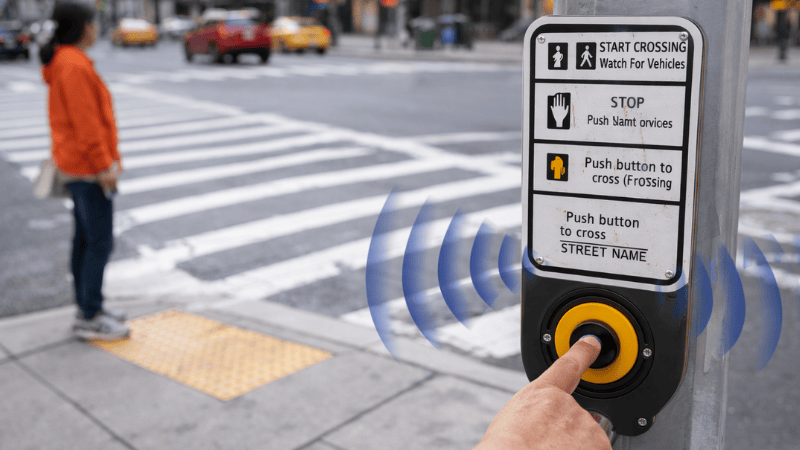
El Departamento de Transporte de Nueva York (NYC DOT) también organiza una reunión pública virtual sobre el APS para recabar las opiniones de los ciudadanos:
Martes, 21 de octubre de 2025, de 17:30 a 19:30
Participa en línea: on.nyc.gov/nycdotaps
Habrá servicios de lengua de signos americana (ASL) y transcripción en tiempo real (CART), y los residentes pueden enviar sus preguntas con antelación por correo electrónico a APS@dot.nyc.gov o llamando al 929-441-9658.
Esta iniciativa pone de relieve el compromiso de la ciudad con el diseño inclusivo de las vías públicas y la accesibilidad. Los equipos municipales y los contratistas externos siguen instalando nuevos dispositivos APS durante todo el año, lo que garantiza que cada vez más cruces cuenten con estas herramientas que salvan vidas.
¿Necesitas ayuda con un APS?
Llama al 311 o al 212-NEW-YORK (212-639-9675) para informar de un problema o solicitar una nueva instalación. También puedes consultar en esta página web una lista de las ubicaciones de los APS en toda la ciudad.
Existe protección jurídica, pero la concienciación es fundamental
La legislación de Nueva York otorga a los peatones la prioridad de paso en la mayoría de los pasos de peatones. Sin embargo, demostrar la responsabilidad en los accidentes de peatones en los pasos de peatones de Nueva York requiere una documentación y una investigación minuciosas. Por eso es fundamental contar con un abogado de confianza cuando se produce una lesión.
Si usted o un ser querido ha resultado herido en un accidente de peatones, WSAT Law está a su disposición para ayudarle a conocer sus derechos y a reclamar una indemnización justa. Nuestro bufete defiende a las personas lesionadas en toda la ciudad de Nueva York con compasión y profesionalidad.
Importante:
Esta información es solo una guía general y NO CONSTITUYE ASESORAMIENTO LEGAL. Cada caso es diferente.
Las imágenes utilizadas son ilustraciones conceptuales y no representan hechos ni clientes reales.
La mejor opción es llamar a nuestras oficinas para obtener ayuda especializada. Llame al (212) 683-3800 para ponerse en contacto con William Schwitzer & Associates y obtener asistencia legal.