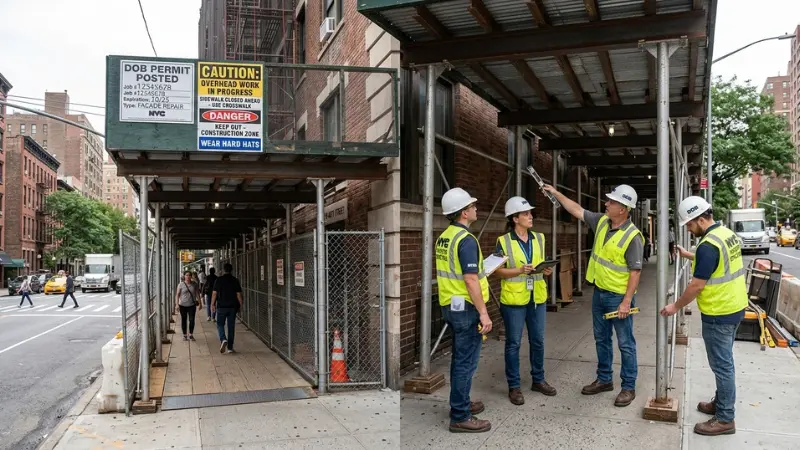
Falling Ice New York City risks increase as temperatures rise and snow begins to melt. In a dense city filled with high-rise buildings, narrow sidewalks, and heavy foot traffic, melting ice can become a serious public safety concern.
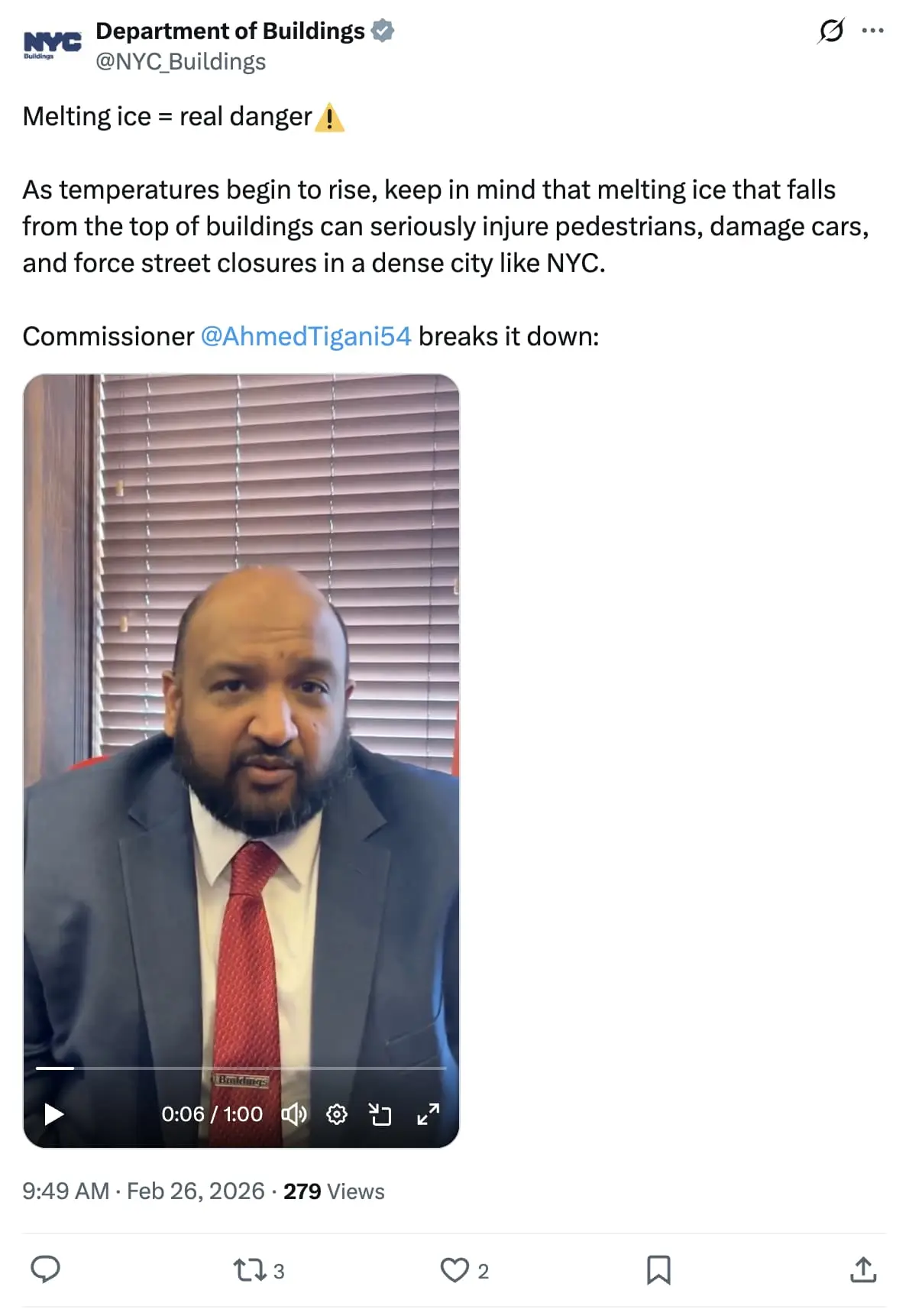
The New York City Department of Buildings recently issued a public warning on X about the danger of ice falling from rooftops and building ledges. According to the the agency, melting ice can detach from upper levels and strike pedestrians below, damage vehicles, and even lead to temporary street closures. Commissioner Ahmed Tigani emphasized how quickly changing weather conditions can increase these hazards.
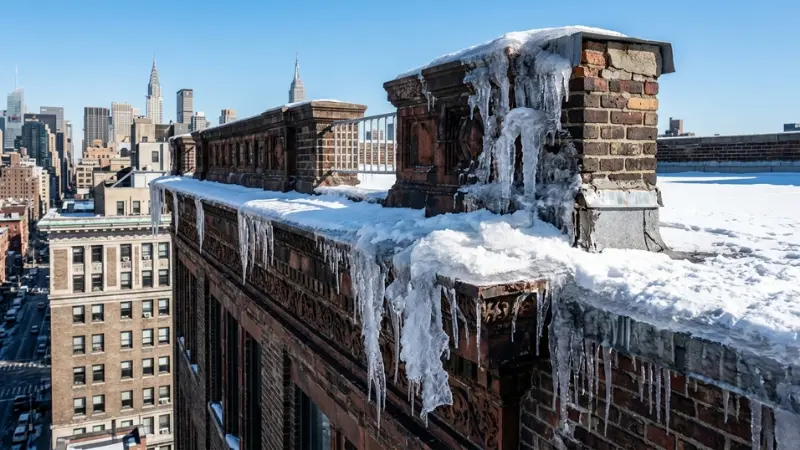
New York City’s built environment makes this risk unique. Thousands of buildings rise several stories high. Ice accumulation can form along parapets, gutters, scaffolding, and decorative façade elements. When temperatures fluctuate, frozen buildup loosens and falls without warning.
According to the NYC Department of Buildings, property owners are responsible for maintaining their buildings in a safe condition, including exterior walls and rooftop areas (https://www.nyc.gov/site/buildings/index.page). The agency conducts façade inspections under the city’s Façade Inspection & Safety Program, which requires periodic reviews of building exteriors (https://www.nyc.gov/site/buildings/safety/facade-inspection-safety-program.page). These inspections are designed to identify structural conditions that could pose risks to the public.
Falling Ice Could Injure Pedestrians: How These Incidents Are Typically Reviewed
When falling ice results in injury, cases are generally examined through a liability framework focused on property maintenance and hazard prevention. Investigations often consider:
-
Whether building maintenance procedures addressed ice accumulation
-
Whether exterior structures were properly inspected
-
Whether known weather conditions created foreseeable risks
-
Whether protective measures, such as sidewalk sheds or barriers, were in place
These reviews are not about the weather alone. They focus on whether a property was maintained in a reasonably safe condition given seasonal conditions.
The Occupational Safety and Health Administration (OSHA) also outlines employer responsibilities related to falling object hazards in certain work environments (https://www.osha.gov). While OSHA standards primarily apply to workplace settings, the broader principle of preventing falling object hazards is widely recognized in safety guidance.
Weather-related injury patterns are not uncommon. The Centers for Disease Control and Prevention (CDC) notes that unintentional injuries are a leading cause of emergency room visits nationwide (https://www.cdc.gov/injury). In cities like New York, winter hazards extend beyond icy sidewalks to overhead risks created by tall structures.
The New York City Department of Transportation has also documented how dense pedestrian corridors increase exposure to street-level hazards (https://www.nyc.gov/html/dot/html/home/home.shtml). In areas with heavy foot traffic, even a small amount of falling debris or ice can have serious consequences.
When a falling ice incident occurs, multiple parties may be reviewed. Property owners, building managers, maintenance contractors, and sometimes construction entities may be examined depending on the circumstances. In some situations, prior complaints, inspection records, or maintenance logs become part of the broader evaluation.
Importantly, these reviews center on accountability and public safety standards. They are not limited to dramatic events. Even non-fatal injuries can result in high medical costs, lost income, and long-term effects.
Why Seasonal Transitions Increase Risk
New York winters often bring cycles of snowfall followed by rapid warming. This freeze-thaw pattern can cause ice to expand and contract, weakening its attachment to building surfaces. As daytime temperatures rise, gravity does the rest.
The Department of Buildings regularly issues seasonal safety reminders because these patterns repeat each year. In a city with more than one million buildings, even isolated maintenance failures can expose large numbers of pedestrians to risk.
Falling ice incidents are typically analyzed in the same way as other falling object cases. The focus is on foreseeability, maintenance practices, and whether reasonable precautions were in place. When building conditions are examined after an injury, agencies and legal professionals often review inspection compliance, prior violations, and structural conditions.
In situations involving reported injuries, the legal process may involve reviewing responsibility and assessing potential damages based on the specific facts presented. These cases can involve detailed document review and, in some instances, expert evaluation of exterior building systems.
As temperatures fluctuate this season, public awareness continues to grow around overhead winter hazards. The recent warning from city officials reinforces how quickly melting ice can become a danger in crowded neighborhoods.
At William Schwitzer & Associates, our role is to advocate for individuals who have been injured in incidents involving unsafe property conditions. When injuries result from falling debris or ice, those cases are examined carefully within established legal frameworks focused on safety and accountability.
Falling Ice Could Injure Pedestrians, remaining a seasonal concern that blends weather, infrastructure, and public safety in one of the country’s most densely populated cities.
Important:
This information is only a general guide and is NOT LEGAL ADVICE. Each case is different. The best option is to call our offices for specialized help, call (212) 683-3800 and contact William Schwitzer & Associates for legal assistance.
The images shown in this blog are for illustrative purposes only.