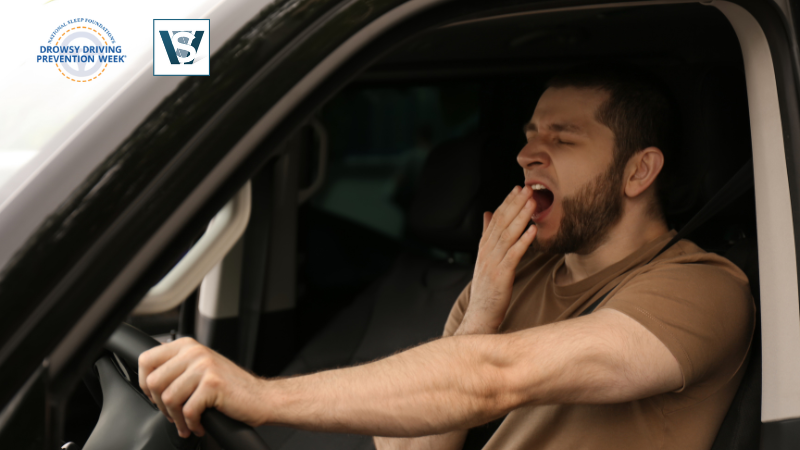
According to the National Highway Traffic Safety Administration (NHTSA), drowsy driving causes an estimated 100,000 crashes each year, leading to more than 71,000 injuries and thousands of deaths. During Drowsy Driving Prevention Week, drivers across the country are reminded that fatigue behind the wheel is not just risky, it’s life-threatening. Understanding the impact of drowsy driving prevention week can help everyone take meaningful steps toward safer roads.
1. Why Drowsy Driving Prevention Week Matters
Drowsy driving prevention week is led by the National Sleep Foundation, which emphasizes that sleep-deprived driving is just as dangerous as drunk or distracted driving. The campaign urges drivers to “Sleep First. Drive Alert.” The message is simple: being rested saves lives. A good night’s sleep improves reaction times, focus, and awareness, three things every driver needs to stay safe.
2. Recognize the Warning Signs of Fatigue
Fatigue doesn’t arrive all at once, it builds slowly. If you find yourself yawning frequently, missing road signs, or drifting from your lane, you might already be too tired to drive. The Centers for Disease Control and Prevention (CDC) reports that being awake for 18 hours can impair driving as much as having a blood alcohol level of 0.05%. During drowsy driving prevention week, these warning signs are worth remembering, especially for shift workers and late-night commuters.

3. How Sleep Affects Reaction Time
Research from the National Institutes of Health (NIH) shows that sleep deprivation reduces attention span, decision-making ability, and reflexes. Missing even two hours of rest can double your chances of a crash. Drivers between the the ages of 16 and 25 are particularly at risk, according to the AAA Foundation for Traffic Safety. Drowsy driving prevention week encourages everyone to treat sleep like fuel, because without it, your brain and body can’t perform safely behind the wheel.

4. Make Small Changes That Save Lives
Simple habits can make a big difference. Plan your rest before long trips, take breaks every two hours, and avoid driving late at night if you haven’t had enough sleep. The U.S. Department of Transportation (DOT) also recommends checking your medication labels, many prescriptions cause drowsiness without warning. Changing plans when you’re tired isn’t a weakness; it’s a responsible decision that can protect lives.
5. WSAT Law’s Commitment to Safer Roads
At WSAT Law, we stand as advocates for those affected by preventable crashes. We support awareness efforts like drowsy driving prevention week, helping New Yorkers understand that drowsy driving is impaired driving. If you or someone you love has been injured in a fatigue-related crash, our team can help you understand your options and ensure your voice is heard.
Do you want to learn more about driver safety awareness? Read more about our blog “The Surprising Similarities Between Drowsy Driving and Drunk Driving.”
Wishing You a Safe Drowsy Driving Prevention Week 2025
Drowsy Driving Prevention Week is more than a reminder, it’s a call to action. Fatigue doesn’t discriminate, and the risks are real. By practicing awareness, prioritizing sleep, and supporting prevention campaigns, we can all make the roads safer. Stay alert, stay rested, and remember: drowsy driving prevention week is everyone’s responsibility.
Importante:
Esta información es solo una guía general y NO CONSTITUYE ASESORAMIENTO LEGAL. Cada caso es diferente.
Las imágenes utilizadas son ilustraciones conceptuales y no representan hechos ni clientes reales.
La mejor opción es llamar a nuestras oficinas para obtener ayuda especializada. Llame al (212) 683-3800 para ponerse en contacto con William Schwitzer & Associates y obtener asistencia legal.