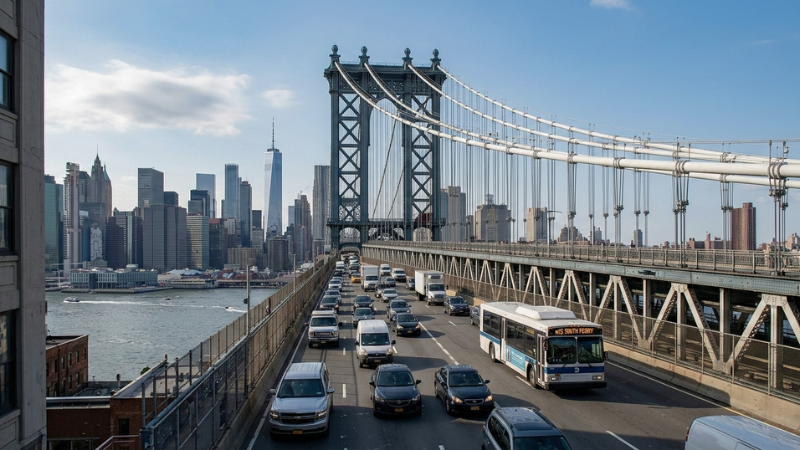
Bus accident injuries can happen suddenly on busy roadways, especially in cities where buses share space with heavy traffic, commercial vehicles, and private cars.
A recent reported bus accident on the Manhattan Bridge in New York City has drawn attention to how incidents involving public transportation may be reviewed. Authorities reported that multiple people were injured following a collision involving a bus and another vehicle on the bridge. Reports indicated that some individuals received medical treatment while others were evaluated at the scene. Incident details were reported by PIX11, based on statements from city officials.
While the cause of the crash was not immediately clear, situations involving bus accident injuries often lead to formal reviews by transportation authorities and safety agencies.
16 Injured In A Bus Accident and Why These Transit Crashes Receive Close Review
Large passenger vehicles like buses can carry dozens of people at once. When collisions occur, the number of individuals affected can be significantly higher than in standard car crashes.
According to the National Highway Traffic Safety Administration (NHTSA), thousands of people are injured each year in crashes involving large buses across the United States. These incidents may involve transit buses, charter buses, or private carriers operating on public roads.
(https://www.nhtsa.gov/road-safety)
Because buses may carry many passengers at once, incidents involving bus accident injuries are often subject to review by transportation and safety agencies.
Transportation officials frequently examine:
-
roadway conditions
-
vehicle movements
-
driver operations
-
safety compliance
In dense urban environments like New York City, traffic patterns and infrastructure can also become part of the broader review.

How Bus Accident Investigations Are Typically Conducted
When a crash involving a passenger bus occurs, several agencies may participate in the review process. In New York City, transit incidents are often examined by city officials, transportation departments, and safety investigators.
The Federal Motor Carrier Safety Administration (FMCSA) monitors safety standards for commercial passenger carriers and collects national crash data related to buses and other large vehicles.
https://www.fmcsa.dot.gov/safety/passenger-safety/passenger-carrier-safety-information
At the same time, transportation agencies and investigators may review factors such as:
-
vehicle maintenance records
-
operator training and licensing
-
roadway design and traffic flow
-
mechanical performance of the vehicles involved
These types of reviews help determine how bus accident investigations are conducted after serious transit crashes.
Why Urban Bridges Can Be High-Risk Traffic Areas
Major bridges in New York City handle large volumes of traffic every day, including passenger vehicles, trucks, and transit buses.
According to the New York City Department of Transportation, millions of vehicles travel across city bridges each year, creating complex traffic environments where congestion and lane changes are common.
https://www.nyc.gov/html/dot/html/infrastructure/bridges.shtml
In these high-traffic corridors, collisions involving large vehicles can affect multiple drivers and passengers.
Because buses carry many occupants at once, bus crash injuries can involve passengers, drivers, and individuals in nearby vehicles.
Bus Crash Injuries and Public Safety Data
Federal safety agencies track national data related to traffic crashes involving large buses.
Research published by the National Transportation Safety Board (NTSB) highlights how transit safety reviews focus on roadway design, operator training, and vehicle safety standards.
https://www.ntsb.gov/safety
Meanwhile, the Centers for Disease Control and Prevention (CDC) reports that motor vehicle crashes remain a leading cause of injury across the United States, affecting drivers, passengers, and pedestrians alike.
https://www.cdc.gov/transportationsafety/index.html
When bus accident injuries occur, investigators often review both the immediate crash conditions and the broader transportation environment.
When People Are Injured in Bus Accidents
A person injured in a bus accident may face medical treatment, time away from work, and long recovery periods. Because buses transport large groups of passengers, these crashes can involve multiple individuals at once.
Transit crashes may include:
-
passengers riding on the bus
-
occupants of nearby vehicles
-
pedestrians or cyclists
-
workers operating vehicles on city roadways
For families and individuals involved in these incidents, official reviews may help clarify the circumstances surrounding a crash.
Advocating for People Affected by Bus Accident Injuries
Transit crashes can leave lasting effects on those involved. Medical care, recovery time, and financial stress are often part of the aftermath when someone experiences bus accident injuries.
At William Schwitzer & Associates, our firm advocates for individuals who have been injured in traffic collisions and serious transportation accidents throughout New York City.
Our work focuses on representing injured people and ensuring their experiences are heard when major accidents occur on city streets and highways.
Important:
This information is only a general guide and is NOT LEGAL ADVICE. Each case is different. The best option is to call our offices for specialized help, call (212) 683-3800 and contact William Schwitzer & Associates for legal assistance.
The images shown in this blog are for illustrative purposes only.